
Chaurikharka School
Project details
Chaurikharka School, now known as Mahendra Jyoti Secondary School, was established by the Himalayan Trust in 1964 in the village Sir Edmund Hillary's surveyors had first scouted, and rejected, as the site for the Lukla airstrip. It sits in Pharak, the valley gateway to the Khumbu, and has grown from a single school building into an early-childhood-to-grade-twelve campus serving Chaurikharka, Lukla and several surrounding villages, teaching around 280 to 320 students today.
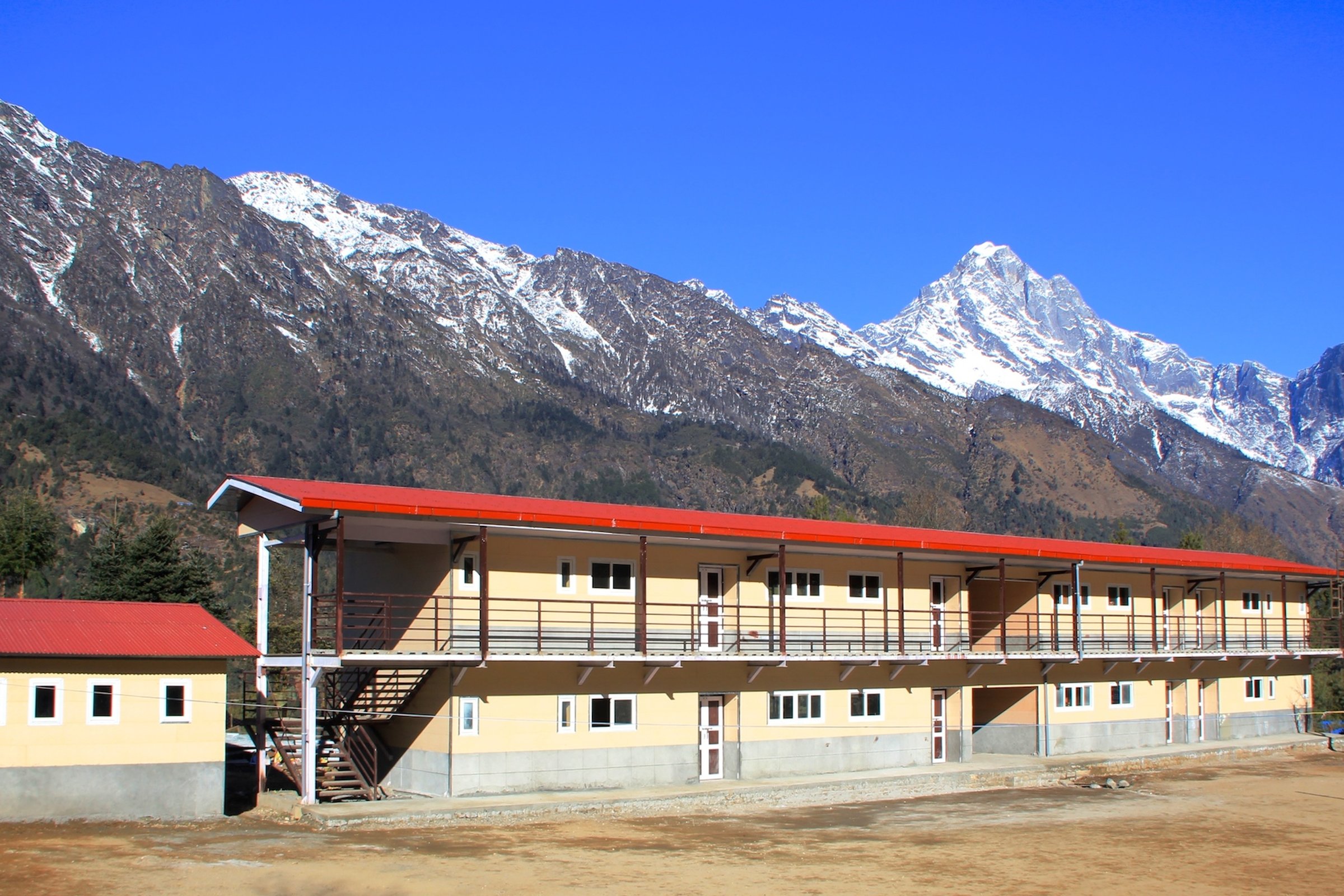
The 2015 earthquakes badly damaged the school, and the Himalayan Trust committed USD 200,000 to a new secondary block as part of a larger rebuild, alongside Swiss donors who funded solar power across the site. The rebuild's committee chair, Lhakpa Gelzen Sherpa, oversaw the project while his own earthquake-damaged home in nearby Musey went unrepaired, choosing to prioritise the school his children attended over his own house.
Chaurikharka was not the Himalayan Trust's first choice for anything. In early 1964 Sir Ed sent his climbing friend Jim Wilson, the Antarctic geologist Bernie Gunn and his Sherpa sardar Mingma Tsering to survey the village as a possible site for an airstrip. They rejected it: too broken, too short, too exposed to cross-winds. Local farmers a little further up the valley, in Lukla, offered a better site instead, and Lukla got the airstrip that became one of the busiest in Nepal. Chaurikharka got a school. The Trust's own records date its founding to that same 1964 season.
The school, now known as Mahendra Jyoti Secondary School, grew from a single building into a campus teaching students from early childhood through to grade twelve, drawing pupils from Chaurikharka, Lukla, Poyan, Syangma and Gumila. Following the same teaching strategies used at Khumjung School, Chaurikharka has posted a pass rate above 70 percent in the national school-leaving exam most years, one of the better results among Solukhumbu's community schools. Each year the school's top three students receive a Sir Edmund Hillary Memorial Scholarship, and two or three more receive a general scholarship on merit.
The 2015 earthquakes badly damaged the school. The Himalayan Trust committed USD 200,000 to a new secondary block, part of a larger master-planned rebuild funded mostly by the Swiss NGO Luklass Chaurikharka Association and Swiss Solidarity, with a total project value of around USD 1.11 million. The vision, as the rebuild committee put it, was to think beyond bricks and mortar: solar panels went onto every building, funded by the Swiss donor, and the finished site included early childhood, primary and secondary buildings, a science lab, a student and teacher hostel, an admin block and a community hall.
The rebuild's committee chair was Lhakpa Gelzen Sherpa, a local man from the nearby village of Musey who also chairs his home village's water project. His own house, badly damaged in the earthquake, went unrepaired while he prioritised the school his own children attended, and he and his family lived instead in his grandfather's house. Engineer Satya Man Lama, who oversaw the wider 15-school rebuild programme across Solukhumbu, described a model built on roughly 15 percent community contribution in cash, labour or local materials, with cement, rebar and roofing helicoptered in from Kathmandu because no roads reach the site.