Water
Nothing is more important to the health and wellbeing of communities than safe, clean water.
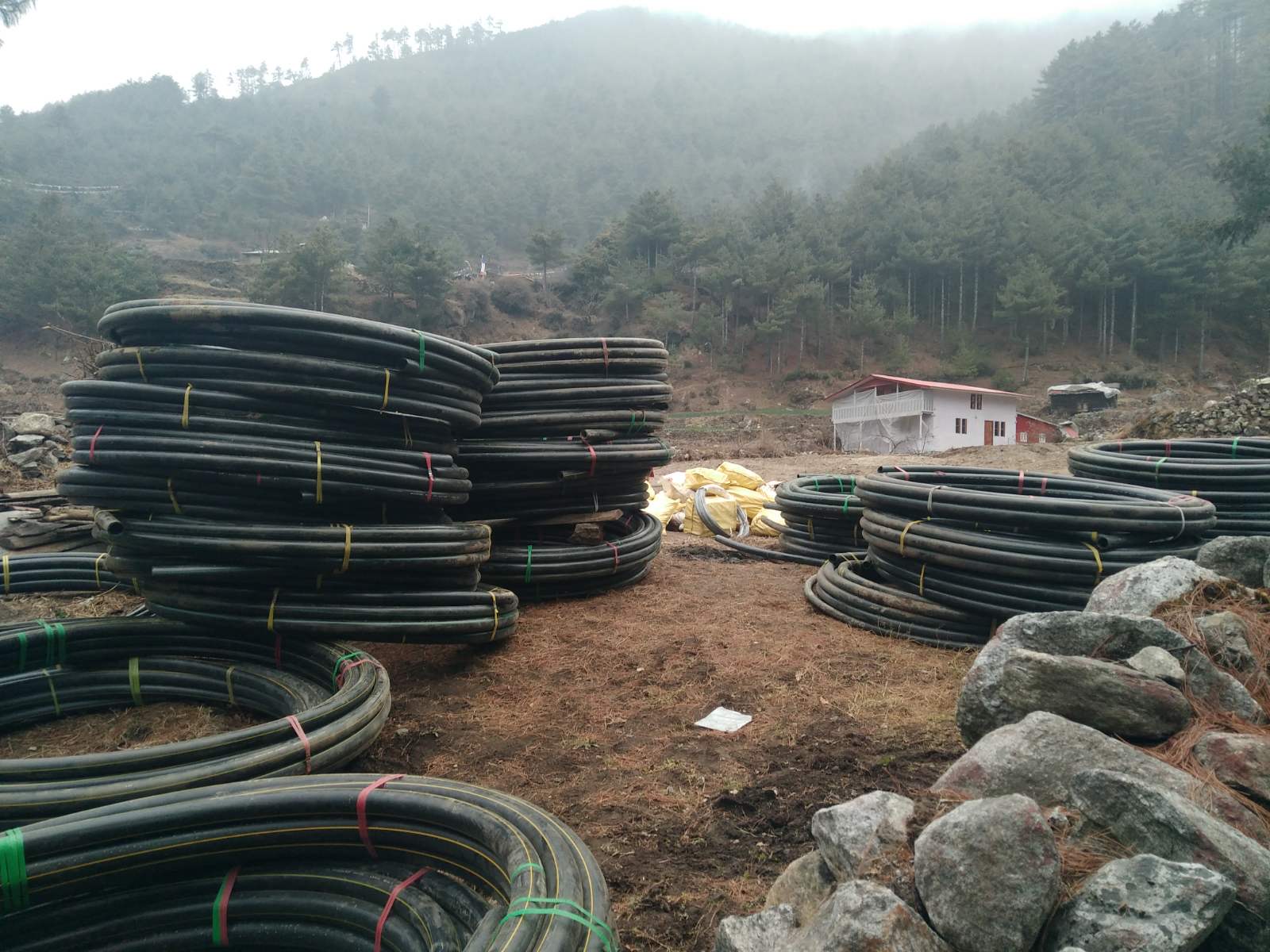
We are working with our local partners to bring safe water to more communities in the Everest region.
The cost of carrying water
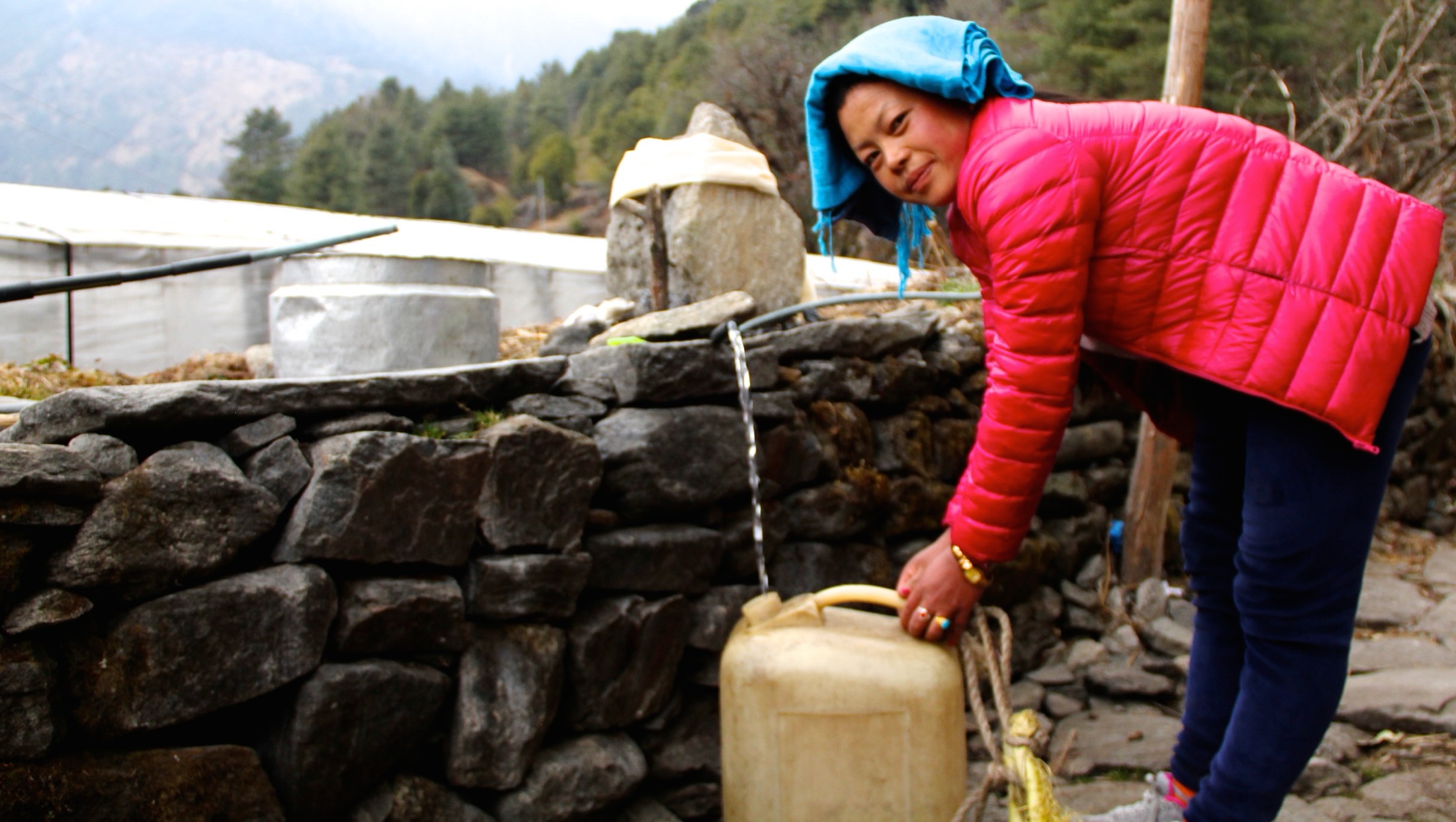
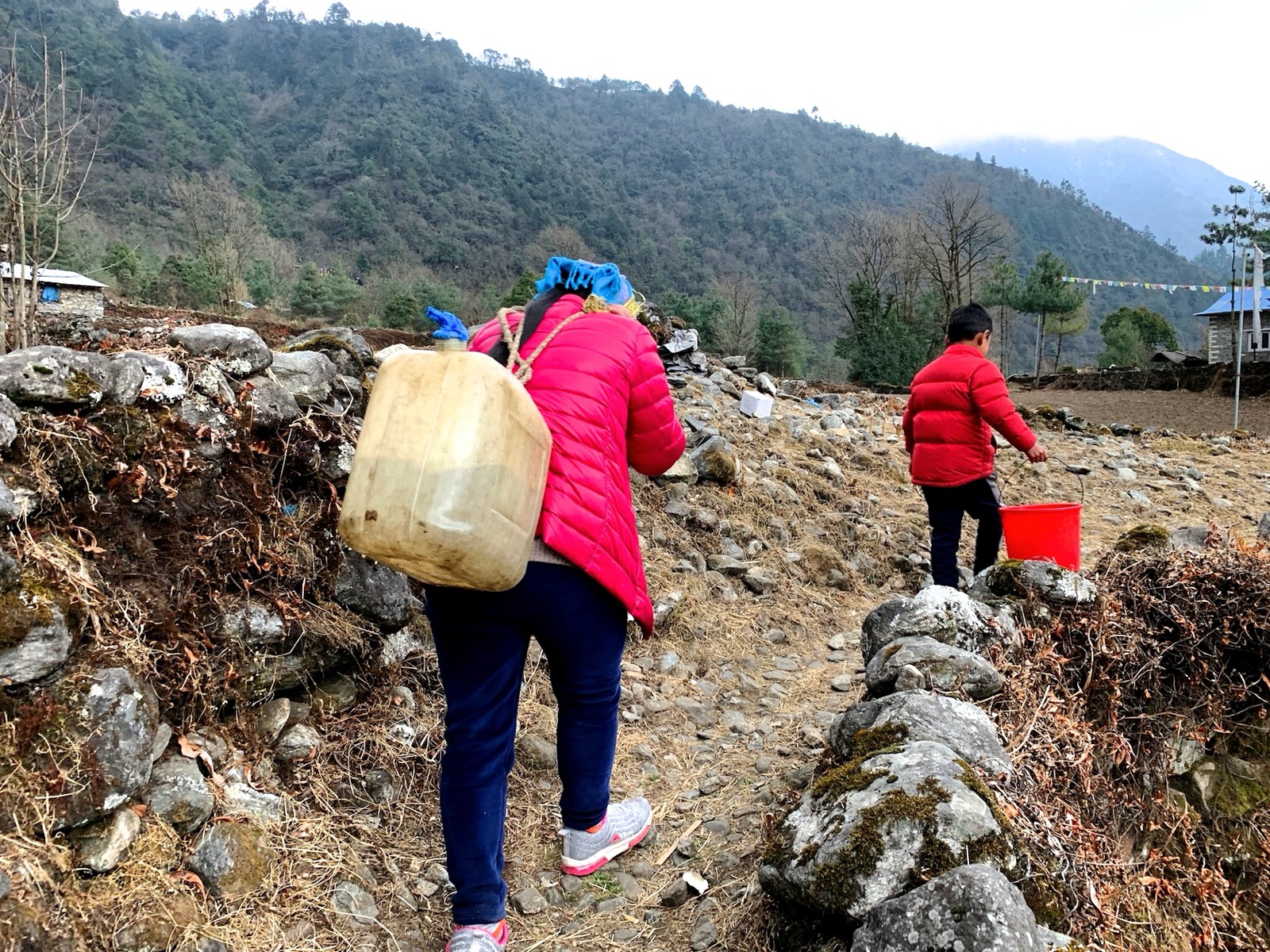
Before these systems were built, people walked long distances to find water, then queued to fill heavy containers they carried home on their backs.
In Musey, the village tank, built with UN funding about 35 years earlier, was destroyed in the 2015 earthquakes. For years afterwards, women in particular walked up to an hour a day to fetch water from the nearest source. In Lukla, the supply installed some 25 years earlier by UNICEF could no longer cope with a growing town.
Safe water, piped to the home
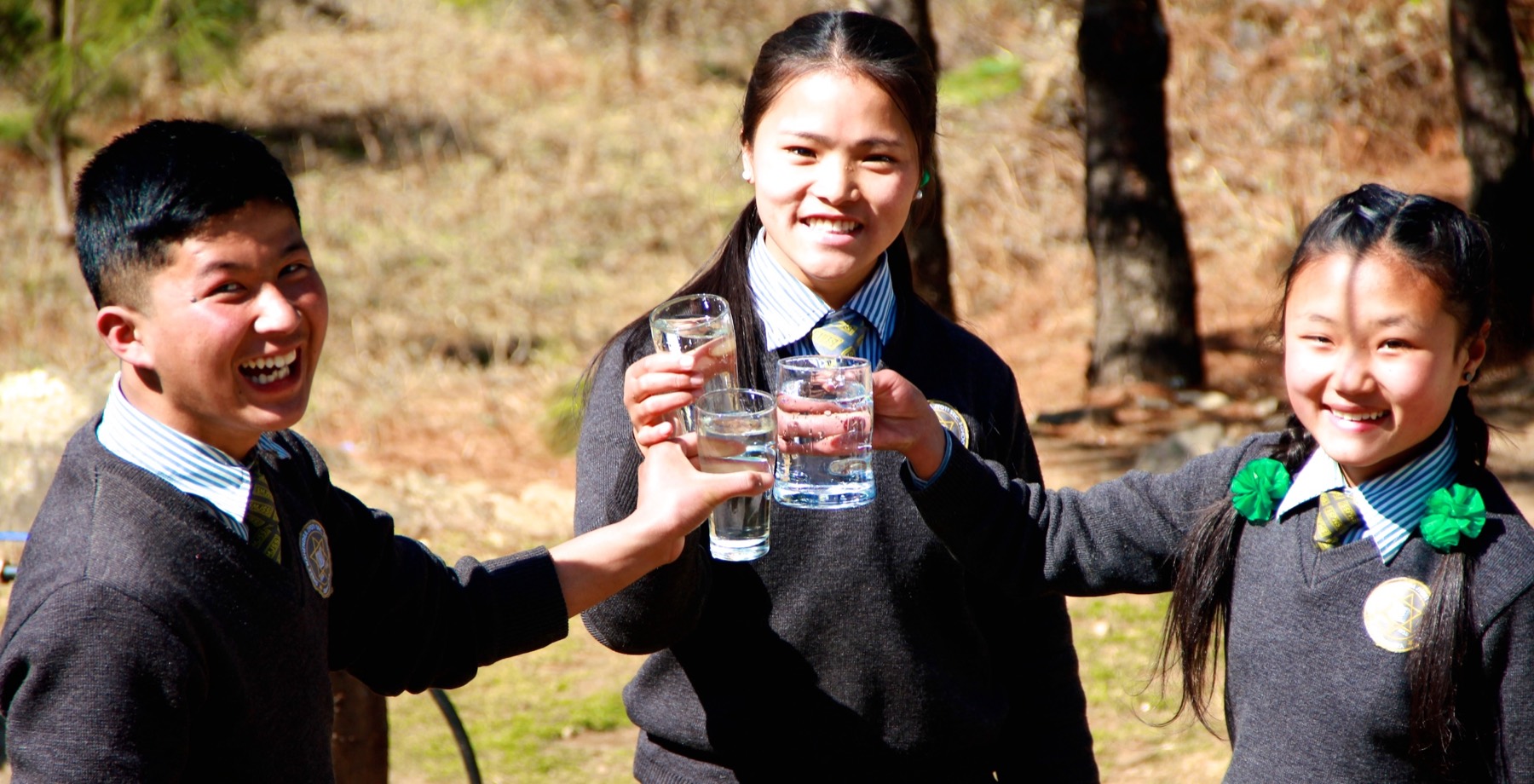
Improving access to safe drinking water has been a priority for the Himalayan Trust since Sir Edmund Hillary helped build water tanks for villages in the upper Khumbu valley. Thanks to Himalayan Trust supporters, we have built safe water systems in the villages of Bubsa and Monjo, and completed community water supplies in Lukla and Musey.
Our water systems:
are seismic resistant
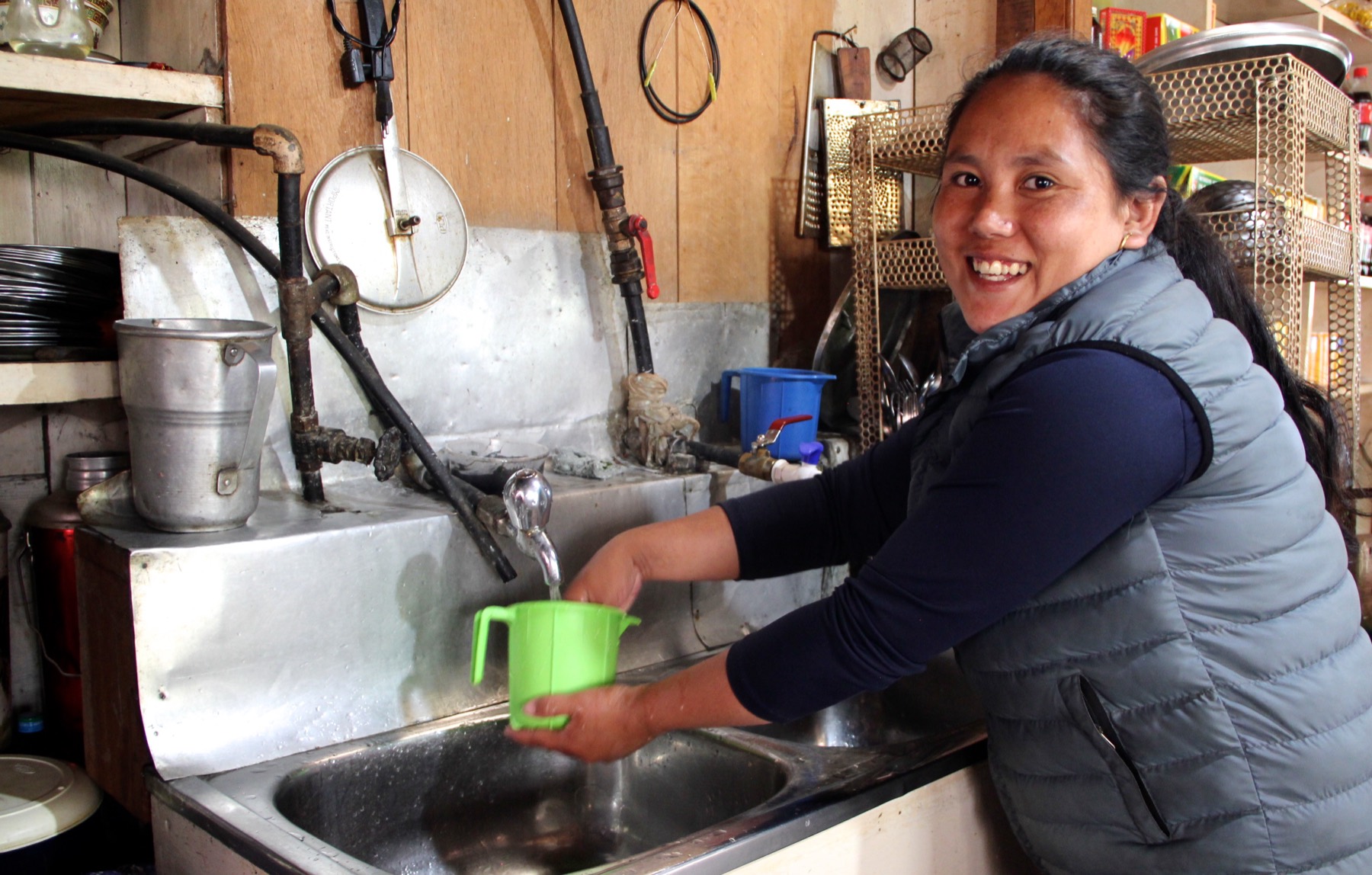
pipe safe, clean water directly into homes
use a sand-filtration system to clean the water
have large storage tanks that also provide water for irrigation
include fire hydrants
are maintained by a small charge for using the water, with local villagers trained to fix and maintain the system
In Lukla and Musey, the work started with the villagers. The Lukla Drinking Water Committee had raised a third of the cost before it asked the Trust for help, and the people of Musey built a small tank of their own while they raised money. The Himalayan Trust helped finish both.
How the systems last
In Lukla, the system is self-sustaining. Households pay for the water they use in their own home, and the funds go back into the upkeep and maintenance of the system. The income also pays for the training and ongoing employment of local people as maintenance technicians, and any profits go into community-led and community-determined projects. These safe water projects help improve the health and wellbeing of entire communities for decades to come.
A small charge for the water pays for upkeep
Local villagers are trained to fix and maintain the system
In Lukla, locals and school children have been trained in fire safety and in the use of the fire hydrants
Water in numbers
Lukla: homes and businesses
Connected to the Lukla water system, finished in October 2014.
Lukla: residents
Around 3,000 residents served, plus the trekkers who pass through.
Musey: reservoir capacity
Litres held by the two new reservoirs delivered in 2019.
Musey: residents
Roughly 270 residents have piped water again after the 2015 earthquakes destroyed their tank.
Musey gets its water back
Musey is a small farming village a 45-minute walk from Lukla, off the main trekking route. Its water tank, built with UN funding about 35 years earlier, was destroyed in the 2015 earthquakes.
For years afterwards, villagers fetched water by hand from a distant source, and women in particular walked up to an hour a day to do it. They built a small tank of their own and began raising money for something bigger.
The Himalayan Trust helped complete the job in 2019, with local partner Action For Nepal. Musey now has two reservoirs holding 45,000 litres between them, a sand filter, and a fire hydrant that can throw water 30 metres down the main street. A local water committee runs it, funded by monthly household payments.
Lhakpa Gelzen Sherpa chairs the committee. His wife, Geeta Maya Sherpa, asked him to let her expand her greenhouse garden from one room to four, expecting to earn around two lakh rupees (about US$2,000) a year from the surplus vegetables.
Help us provide this essential resource
New water systems are needed throughout the region. Establishing a system for an entire village is expensive, so every donation matters.
Built alongside the villages
In Lukla, the Drinking Water Committee, chaired by Lakpa Thering Sherpa with Sonam Sherpa as engineer and Lakpa Chirri Sherpa as treasurer, raised a third of the cost before it asked the Trust for help. In Musey, the finished system was delivered with local partner Action For Nepal. After the Lukla water project, the local community established a site celebrating their special friendship with New Zealand.