Healthcare
We help fund and equip Khunde Hospital and the clinics around it, and we support the health workers who keep Solukhumbu communities healthy.
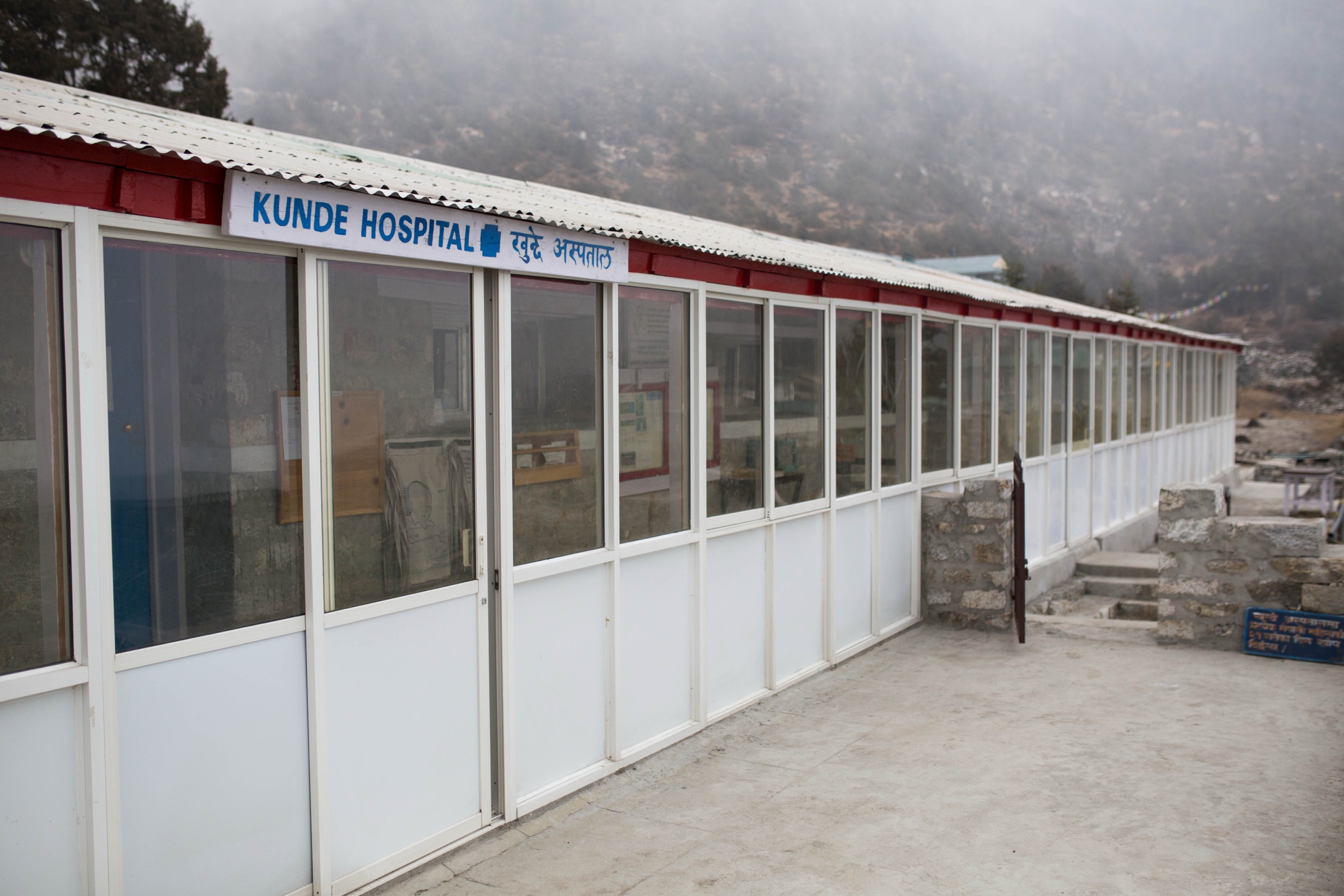
Khunde Hospital opened on 18 December 1966 and turns 60 this year. It is open day and night, and the villages of Thame and Phortse have clinics of their own.
Care is a long walk away
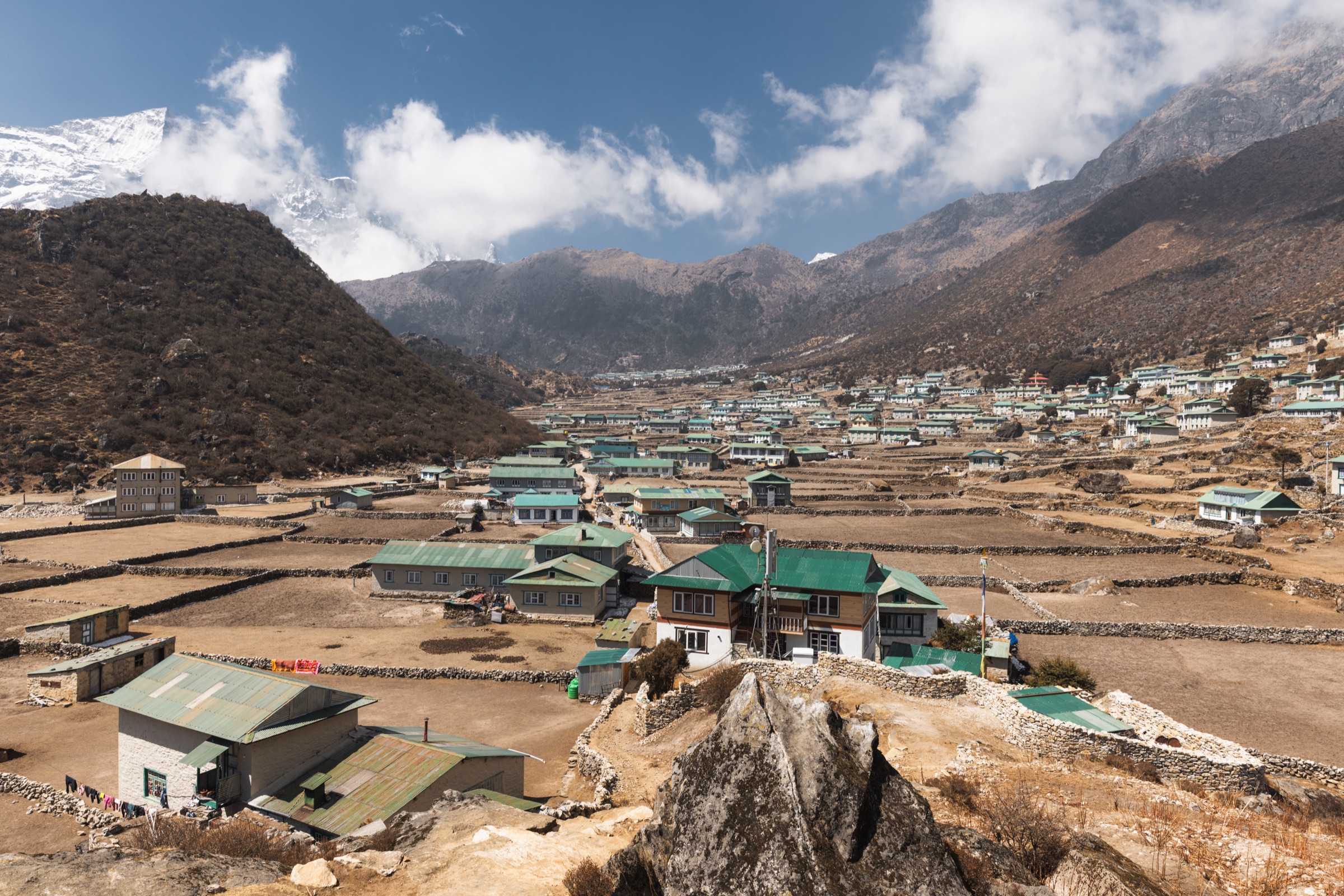
Many villages in Solukhumbu are a long walk from the nearest hospital.
Specialist care is not routinely available in the region. Outreach clinics and camps are especially important for elderly and less mobile residents.
A hospital, and the clinics around it
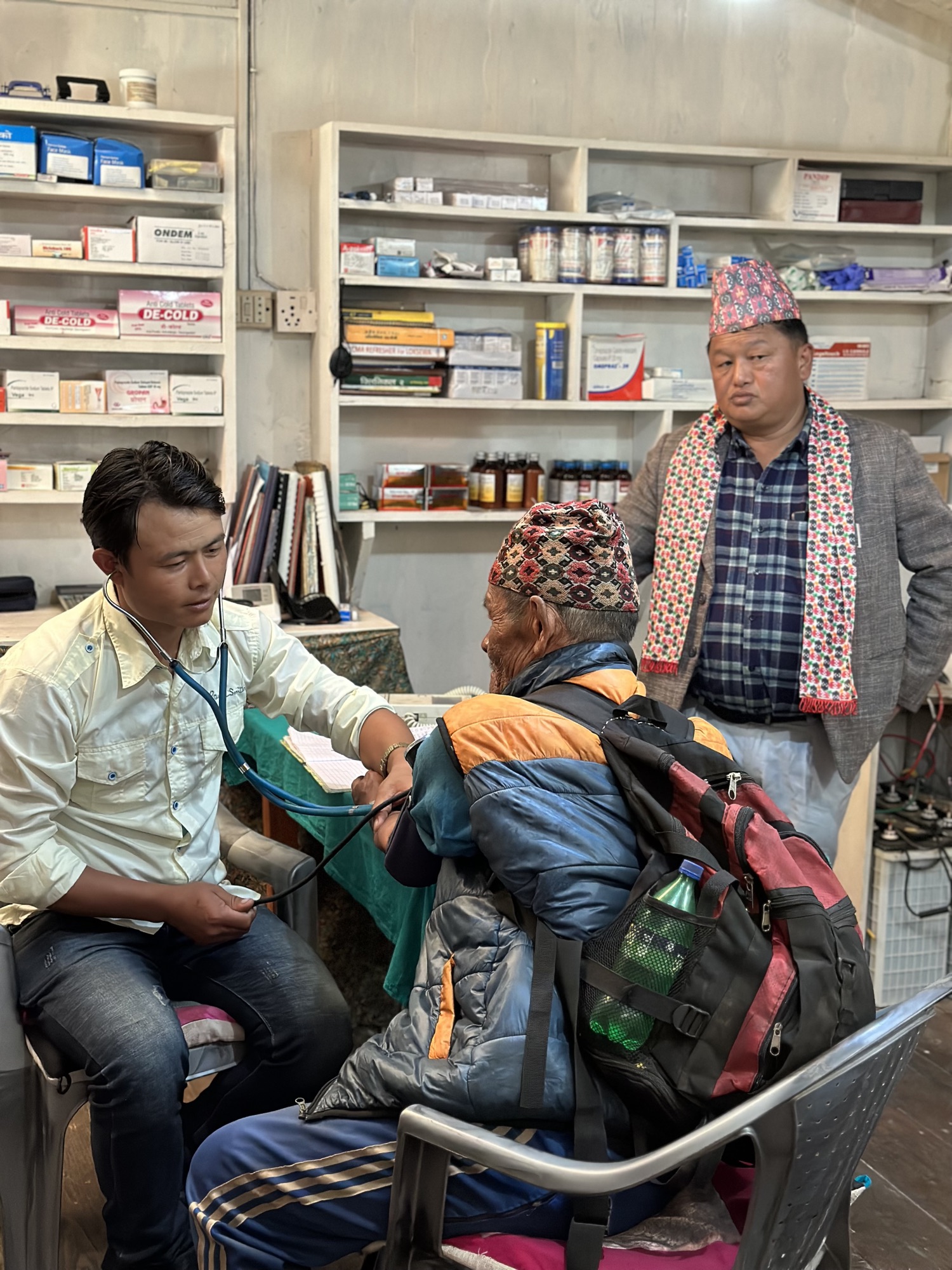
Khunde Hospital is the centre of the Trust's healthcare work. Around it, health workers run village clinics, and the hospital's doctors back them up.
Khunde Hospital, with outpatient, inpatient and emergency care open 24 hours
Village clinics at Thame and Phortse, run by health workers
Khunde doctors supporting those clinics with supplies, outreach visits and telemedicine
Visiting specialists and dental, eye and endoscopy camps
Khunde Hospital has been led by Nepali doctors since 2002, a handover Sir Edmund Hillary had aimed for. The Trust supports them.

Meeting illness earlier
Immunisation and family planning continue to be important at Khunde. A new Healthcare Advisory Committee is working to add more preventative approaches, so the Trust can meet problems early. In May 2026 a visiting specialist team ran a three-day endoscopy camp at Khunde, where Helicobacter pylori, a stomach infection linked to ulcers and cancer, is common.
A Healthcare Advisory Committee, guiding more preventative care
A new clinic at Thame, rebuilt by Himalayan Trust Nepal to replace the one lost in the 2024 flood
Scholarships that train local people as health workers

What the hospital and clinics do
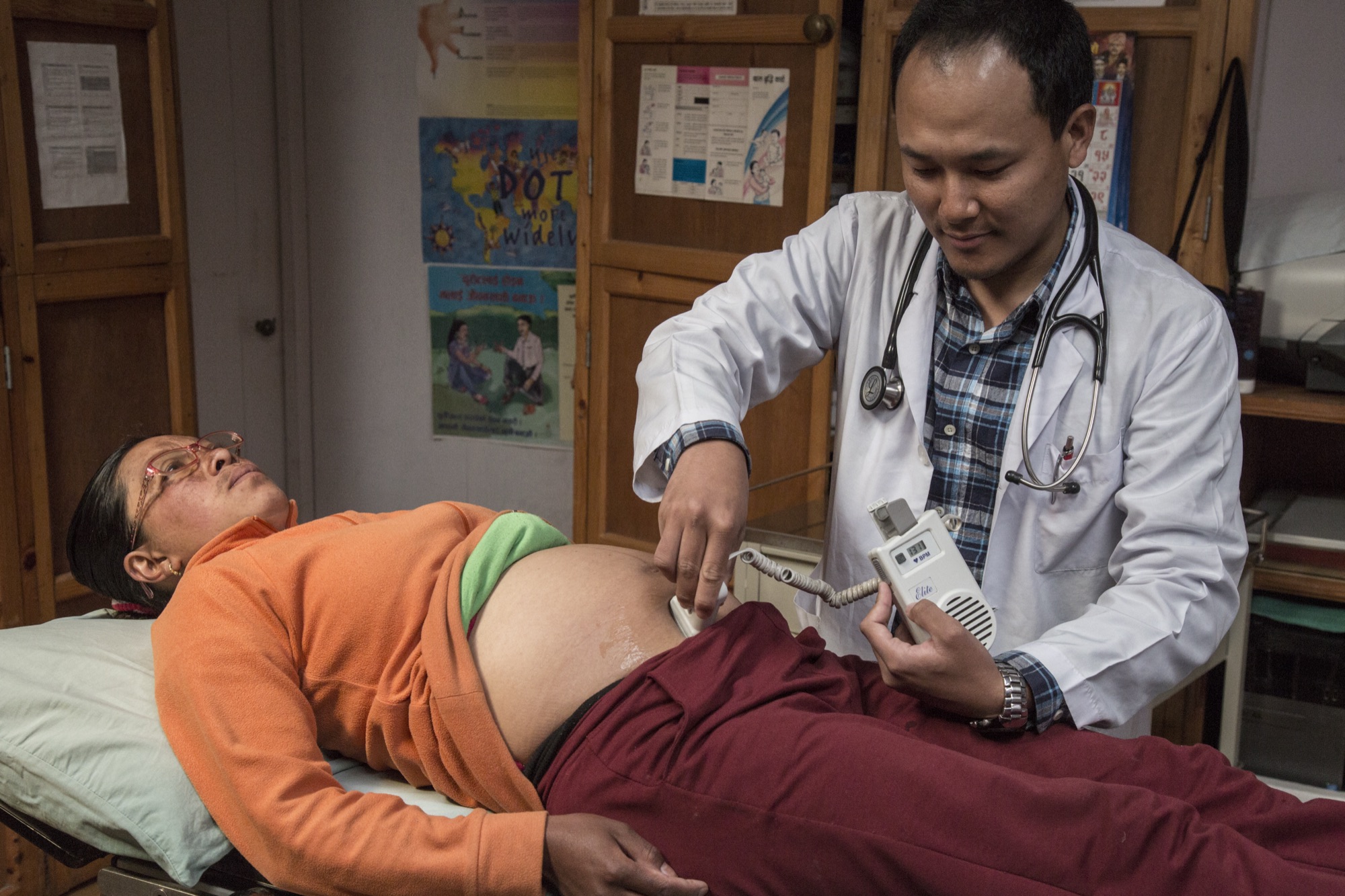
Khunde Hospital, its village clinics and its visiting camps cover everyday illness, emergencies, eye care and dental care.
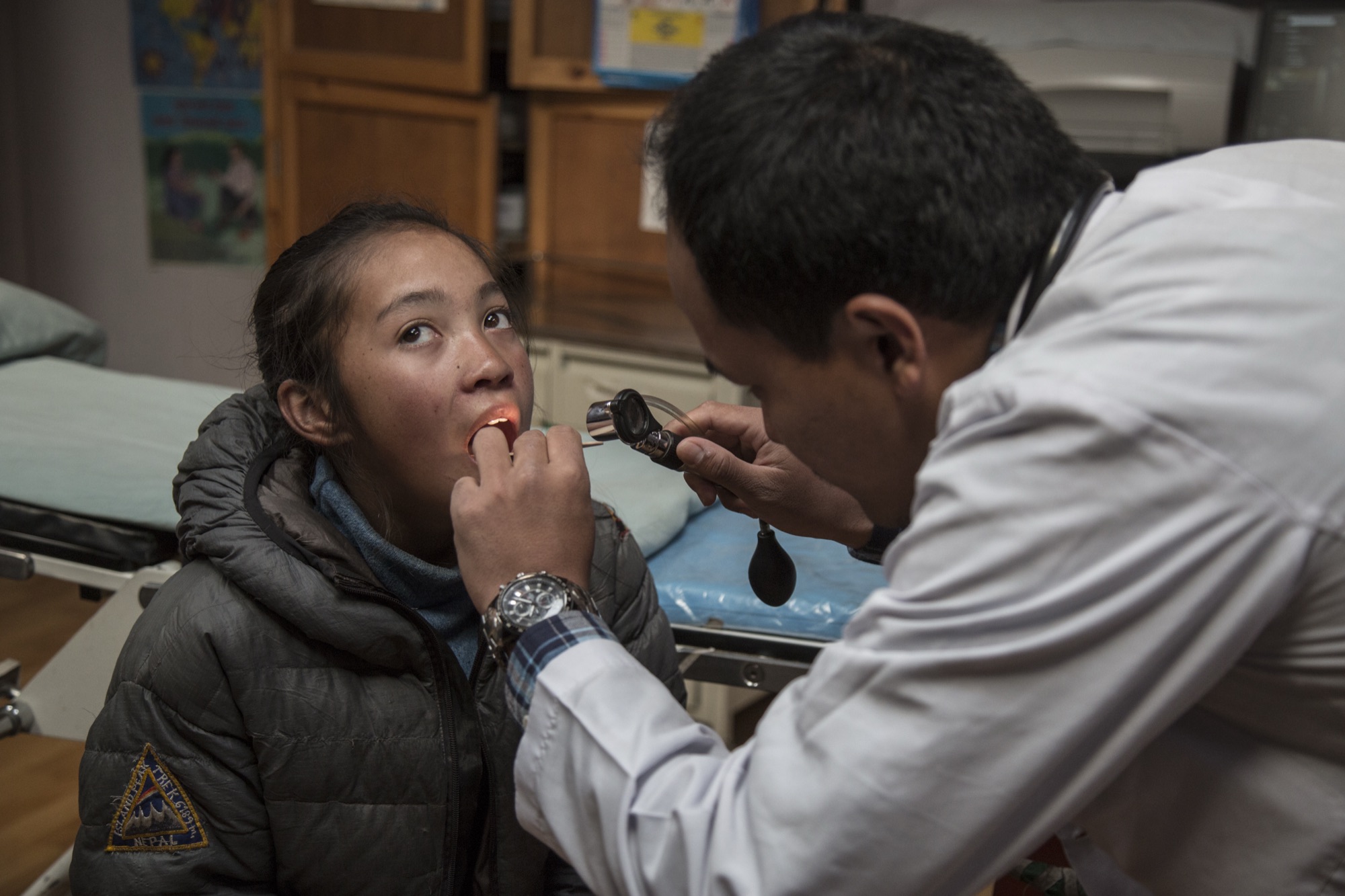
Everyday illness
Infections and bone and joint problems are the most common complaints.

Long-term conditions
Care for ongoing problems such as high blood pressure.

Day and night care
Inpatient and emergency care, 24 hours a day.
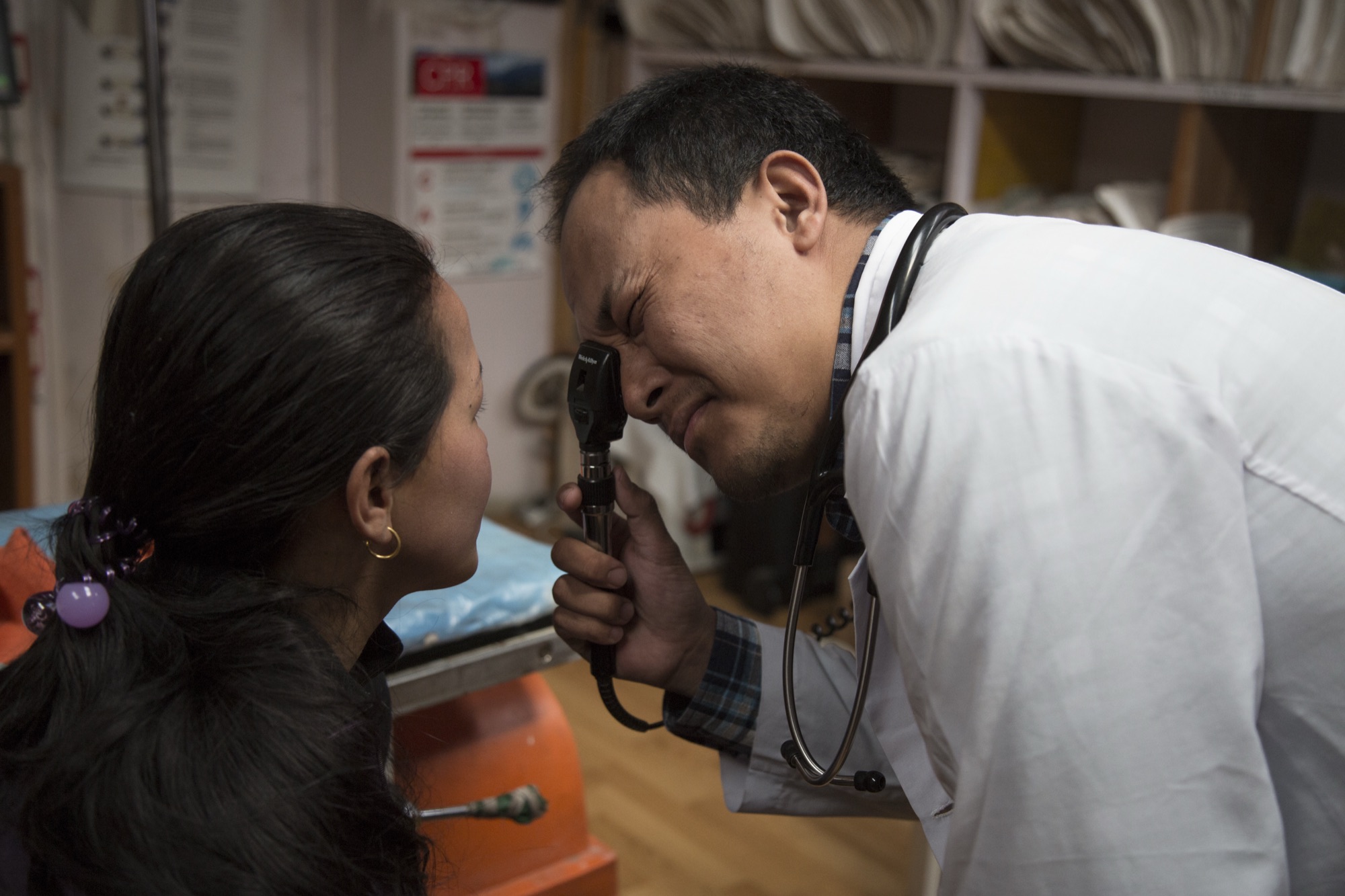
Eye care
An eye clinic at Khunde, plus camps in schools and villages.
Healthcare in numbers
Khunde Hospital
Outpatients seen at Khunde Hospital in the year to June 2026.
Village clinics
Patients seen at the Phortse and Thame clinics in the year to June 2026.
Admissions
Patients admitted to Khunde Hospital in the year to June 2026.
Camps
Dental, eye and endoscopy camps held in the year to June 2026.

When the Khumbu had almost no health services
In the early 1960s there were almost no modern health services in the Khumbu. Infant and child mortality was high, tuberculosis was a big medical problem, and a lack of iodine in the diet caused very high rates of goitre.
In 1963 Sir Edmund Hillary provided a smallpox vaccination programme, knowing it was temporary. His vision was permanent health services that treat illness and prevent disease. He asked the Government of Nepal for permission and began looking for funding. In 1966 the Trust began an iodised oil injection programme, modelled on one in the New Guinea Highlands, and the large goitres once seen in every village became a thing of the past.
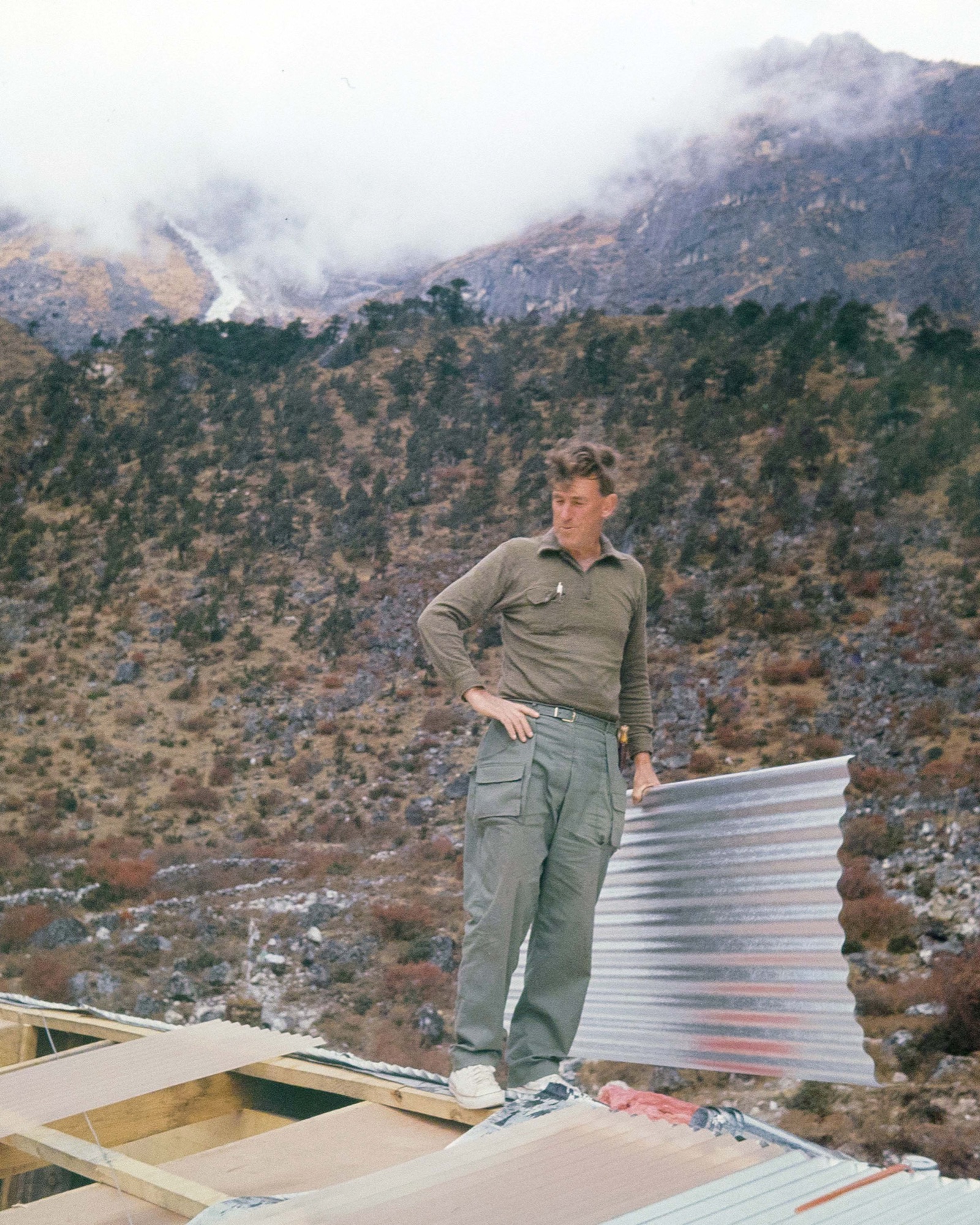
The hospital at Khunde
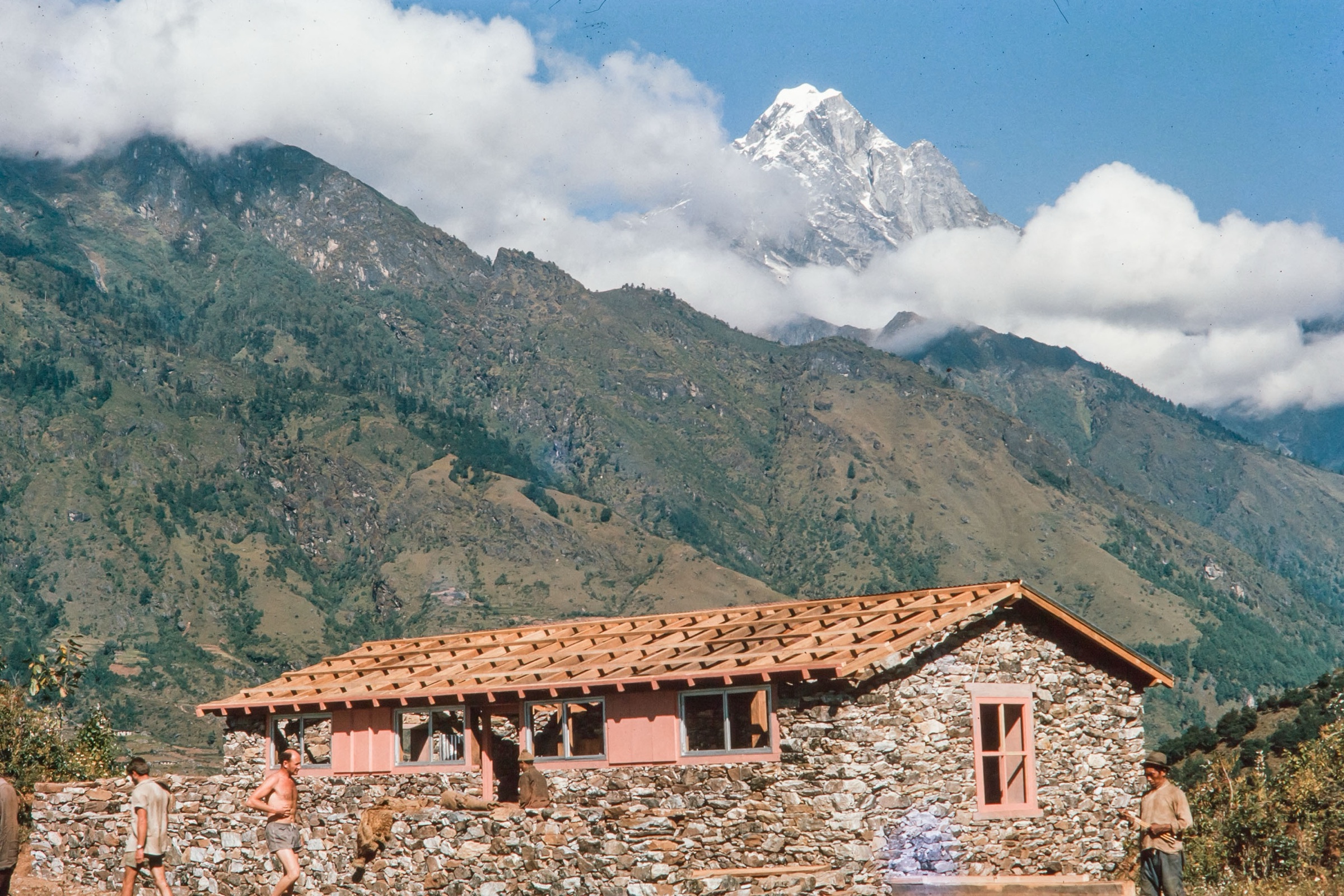
Khunde was the home of Mingma Tsering, Sir Ed's friend and sirdar, and the village gave the project its support.
A long stone building, one room deep, facing the sun
Running water and an aluminium roof
Built by a team of New Zealanders and Sherpas, combining New Zealand and Sherpa building practices and skills
Supported by the village and its headman
Thirty-six years of volunteer doctors
From 1966 until 2002, Khunde was staffed by overseas volunteer doctors, first from New Zealand and later also from Canada. From the beginning, local staff were employed and trained to work in the hospital and the villages, and trust in the hospital grew. Despite its remoteness, Khunde has been staffed, supplied and maintained.
Women attending antenatal classes, and a few having their babies in the hospital
New groups of people drawn to the hospital as the local economy developed
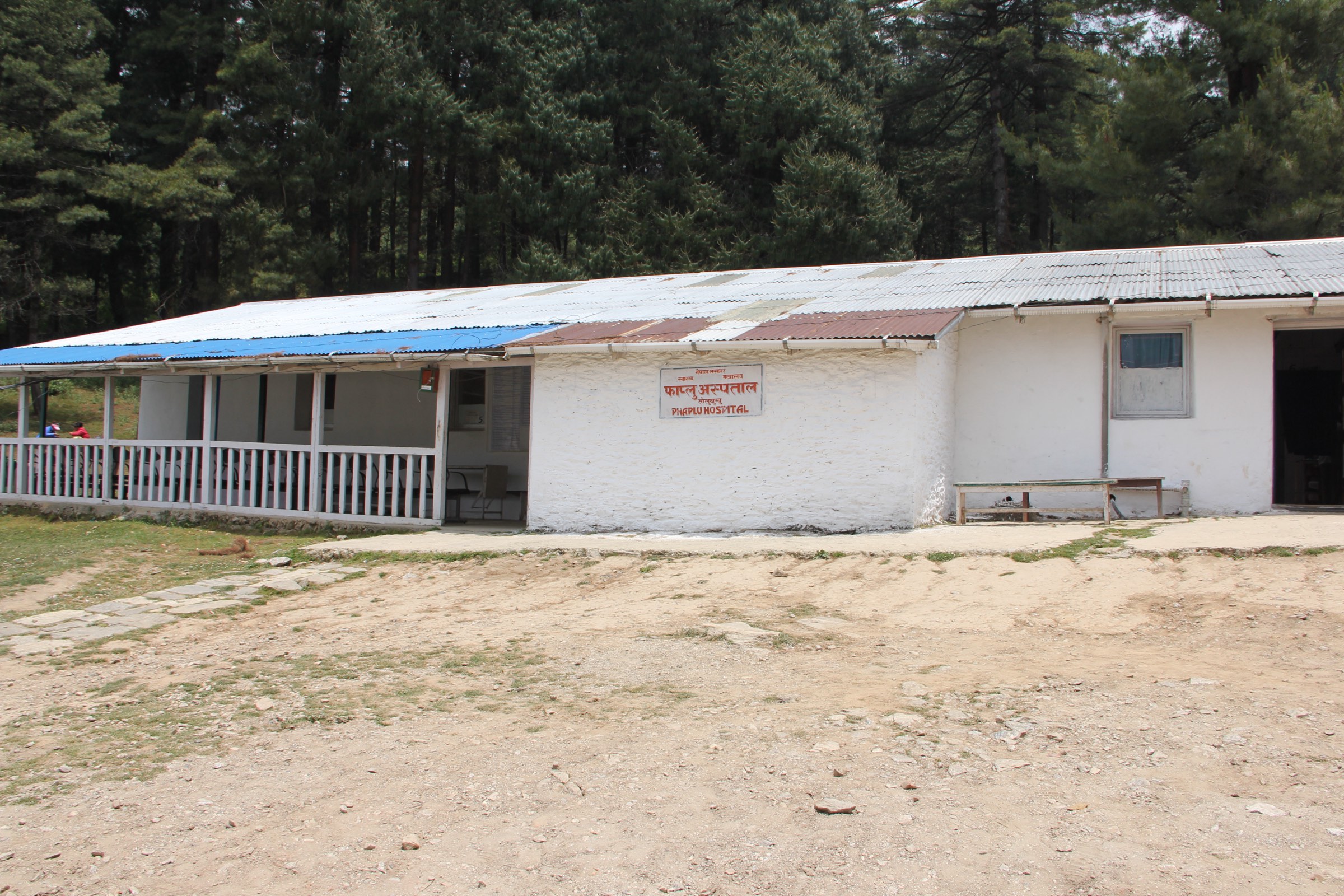
Phaplu Hospital in Solu, built in 1975 and also staffed by overseas volunteers
Meet Dr Kami Temba

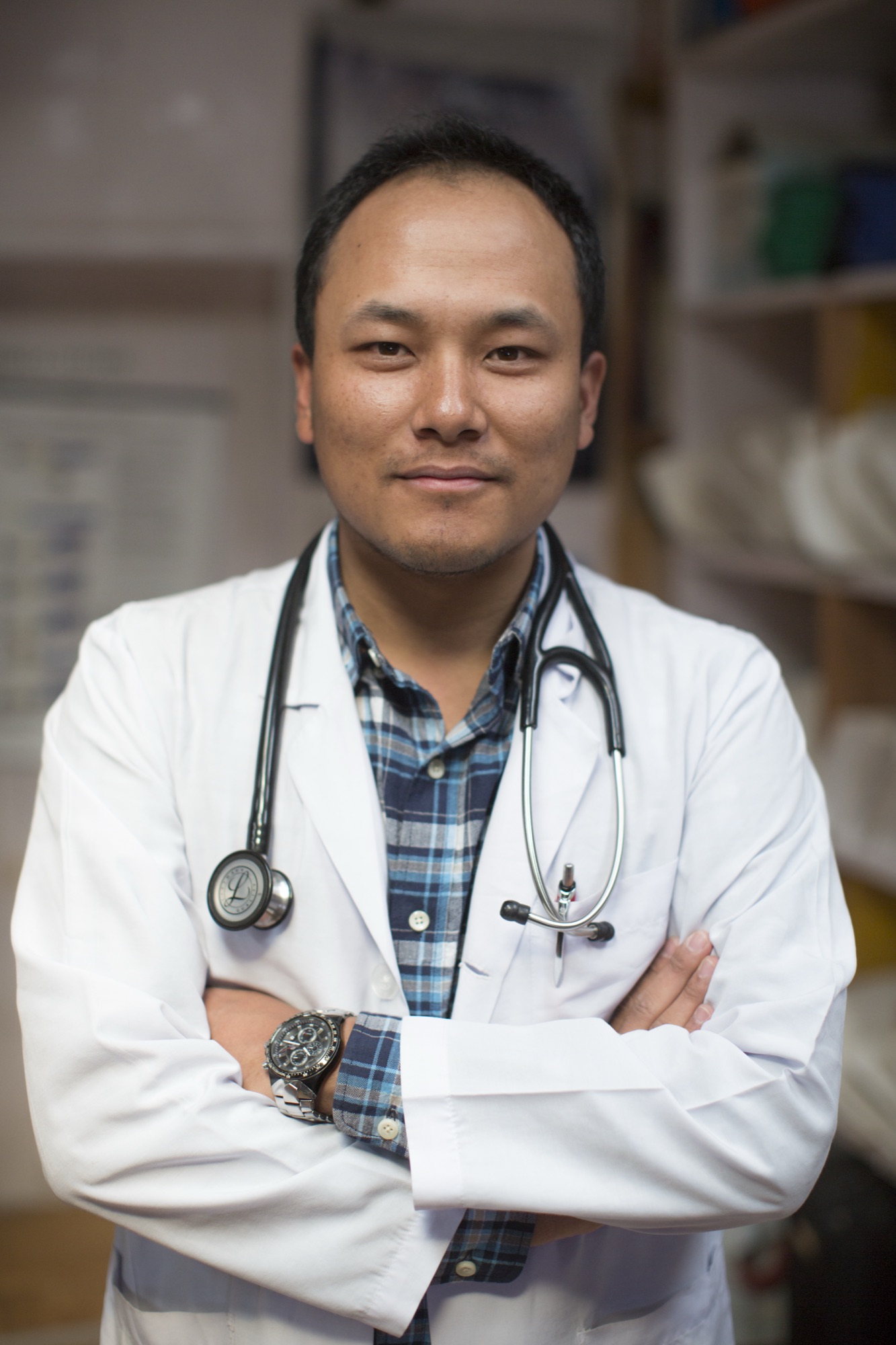
Dr Kami Temba Sherpa started at Khunde Hospital as a healthcare assistant. He trained at the Fiji School of Medicine, then returned to lead the hospital.
Handing Khunde to local leadership was something Sir Edmund Hillary had aimed for, and the Trust counts achieving it as a significant milestone in the hospital's history.
Later this year Dr Kami will retire, as Khunde marks its 60th anniversary.
Care at Khunde day and night
Khunde Hospital is open 24 hours a day for the villages of the Khumbu. Your gift to the Trust helps fund its running costs. In the year to June 2026 the Trust's own spending on Khunde Hospital was $162,379. The American Himalayan Foundation funds the hospital jointly with us.
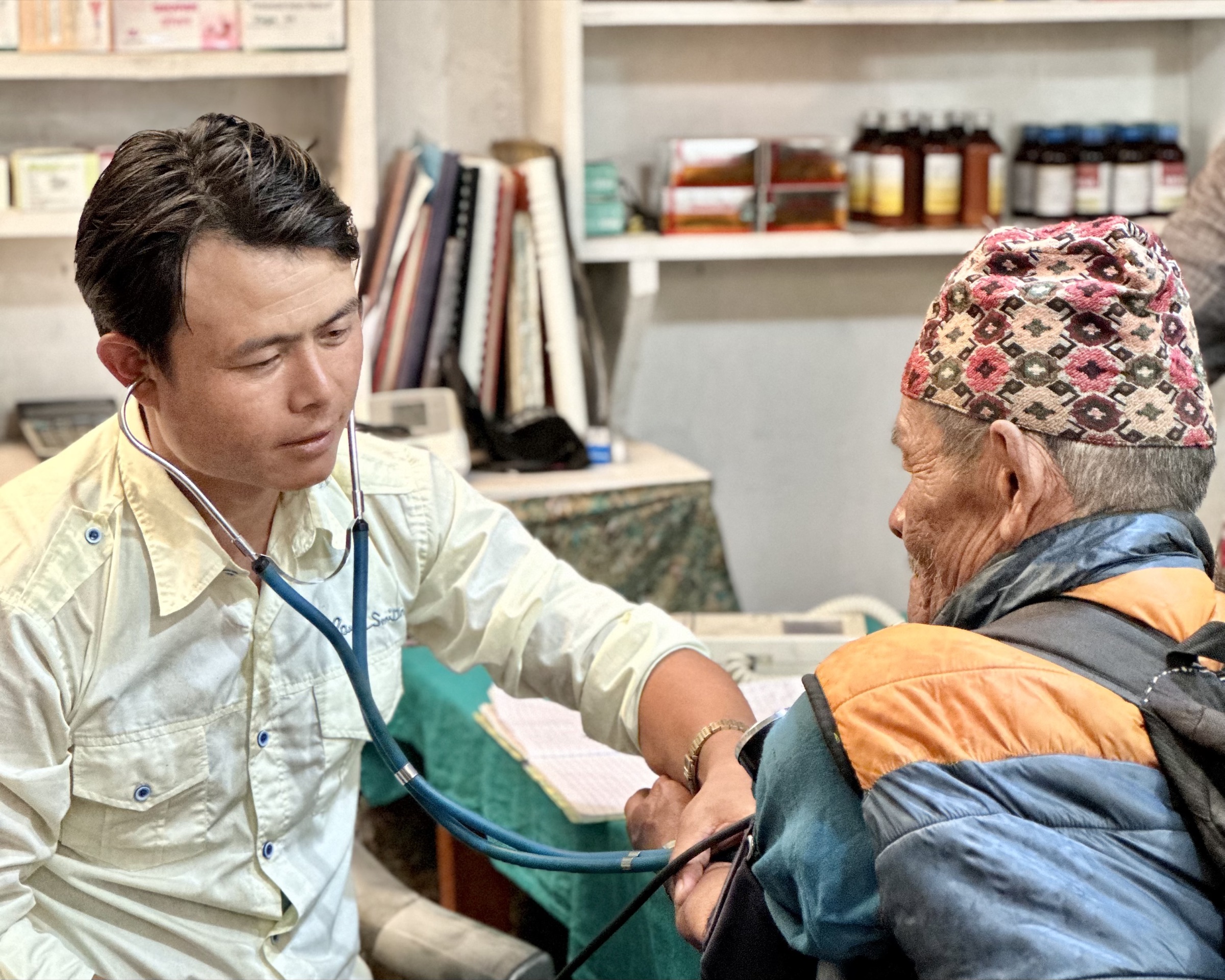
Healthcare projects through the decades
The record of the Trust's health work, one project at a time, from the newest back to Khunde Hospital in 1966.


Care built with Nepal
The Trust works with Himalayan Trust Nepal, our partner organisation, and funds Khunde Hospital jointly with the American Himalayan Foundation. The Sokol Family Foundation supports the hospital, and Eyes4Everest Australia supports its eye clinic. Visiting specialists such as Dr Tshering Wangdi, a Thame local and former Khunde doctor, run camps that bring specialist services not routinely available in the region.
Healthcare stories
Stories from the hospital, the clinics and the people who staff them.