
Environment
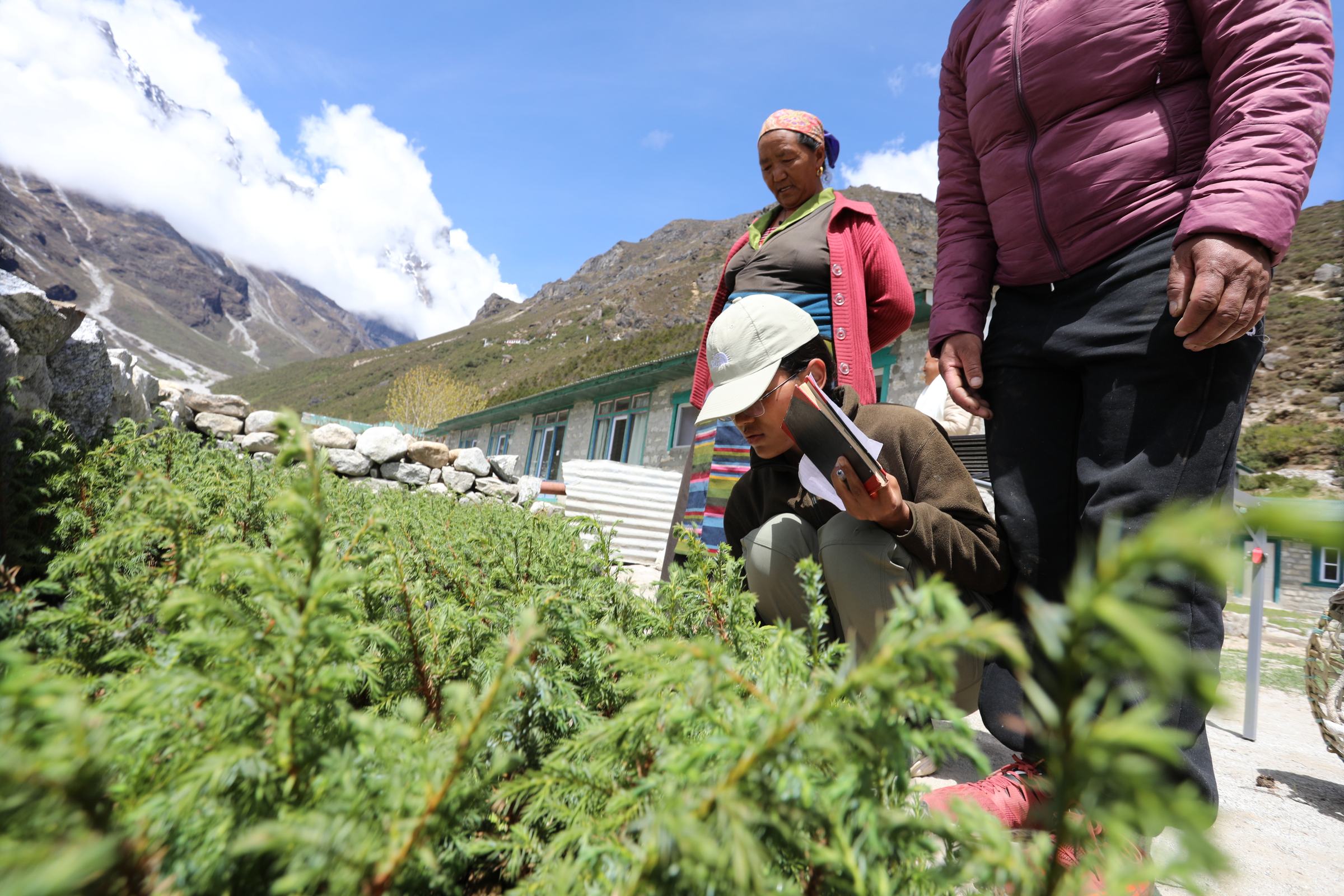
The Trust helped start the Sagarmatha National Park forestry project more than four decades ago, and the project grew trees for the park for around thirty years. Today the work is a pilot planting at Thame, high in the Khumbu, where the ground is severely degraded and trees grow slowly.
The challenge
The high ground is where the work is now
Planting in the lower Khumbu has reached near-saturation, with limited room for more. The high-altitude areas remain severely degraded, and trees grow slowly in the harsh climate.
A glacial lake outburst flood on 16 August 2024 washed away Thame's school, clinic and high-altitude forest nursery.
Glacial flood risk across the Khumbu is rising.
The Trust sees environmental work as the area most in need of growth.
How the work runs
How the Thame pilot works
Nick Ledgard, who managed the park forestry project, has written that good tree establishment is all about the right tree in the right place. The Thame pilot has four parts.
Planting at Thame
A pilot planting of juniper and rhododendron trees, testing whether trees grown in low-altitude nurseries can survive on the high ground.
Household care
Thame households take the plants and look after them.
Monthly inspections
Himalayan Trust Nepal inspects the plants in the first week of every month and records what is lost and why.
What the inspections found
Most of the plants that dried up were in flood-affected areas, while those on arable land seemed to be doing well.
In figures
What the record shows
Monitoring at Thame has been hard amid power outages, access problems and further flood damage, and the Trust reports a positive result so far.
Plants in the Thame pilot
1,027
Plants taken by Thame households to plant and look after.
Hectares planted
250
Around 250 hectares planted, mostly around the tree line.
Seedlings grown a year
50,000+
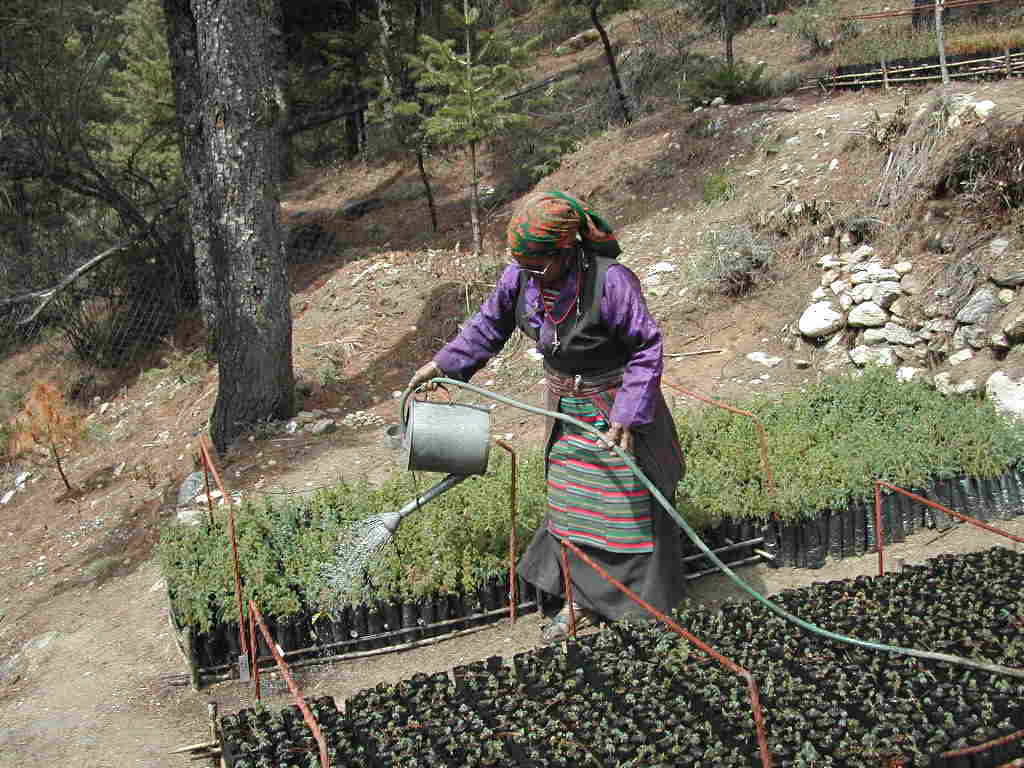
The park project's three nurseries grew at least 50,000 seedlings a year, mostly blue pine and silver fir.
Three decades of planting around the tree line
The Sagarmatha National Park forestry project began as a venture between the New Zealand Government and the Himalayan Trust, headed by Sir Edmund Hillary. Its major sponsors were the Trust and the Sir Edmund Hillary Foundation of Canada, and six local people worked on it, led by supervisor Ranajit Gurung.
Park staff and village community groups chose where each seedling went. Nick Ledgard, a New Zealand forest research scientist, managed the project from 1989, and the project produced a high-altitude afforestation manual that records the knowledge and experience it gained.
The project was then handed over to Sagarmatha National Park and its Buffer Zone. The nurseries at Phurte and Tashinga still operate, at reduced size.
Help the work reach the high ground
Gifts to the Trust support its environmental work.