
Lukla Water Project
Project details
In 2013 the Lukla Drinking Water Committee asked the Himalayan Trust for help finishing a water scheme for the town, having already raised a third of the cost themselves. It was the Trust's first new water project since Sir Edmund Hillary's own pipelines in the 1960s, and it fell in the sixtieth anniversary year of the first ascent of Everest, the event that first drew Sir Ed into development work in the region. The scheme was completed on budget in October 2014.
The project was led locally by committee chair Lakpa Thering Sherpa, engineer Sonam Sherpa and treasurer Lakpa Chirri Sherpa, who between them raised fresh funds on a New Zealand speaking tour in May 2014. The finished system pipes clean water underground to 200 homes and businesses, serving around 3,000 residents and the trekkers who pass through, and it includes a high-pressure fire hydrant network. It survived the April 2015 earthquake unaffected, and an outside evaluator called it the best low-cost water and fire-fighting scheme he had seen anywhere.
In mid-2013 the Lukla Drinking Water Committee asked the Himalayan Trust for help finishing a water scheme the town had already started planning and part-funding itself. The Trust had not run a water project since Sir Ed's own pipelines in the 1960s, and the timing struck a chord: 2013 was the sixtieth anniversary of the first ascent of Everest, the climb that first drew Sir Ed into the valley's development. Lukla itself, once a scatter of potato fields around the airstrip Sir Ed built in 1964, had grown into a town of about 3,000 people whose UNICEF-built water supply, installed some 25 years earlier, could no longer cope.
The committee, chaired by Lakpa Thering Sherpa with Sonam Sherpa as engineer and Lakpa Chirri Sherpa as treasurer, had already raised a third of the cost themselves, NPR 2,000,000, before asking the Trust for help. In May 2014 Lakpa Thering Sherpa and his wife, Dr Jangmoo Sherpa, toured New Zealand speaking about the project, raising further funds and, the Trust said afterwards, doing more than anyone that year to raise its public profile.
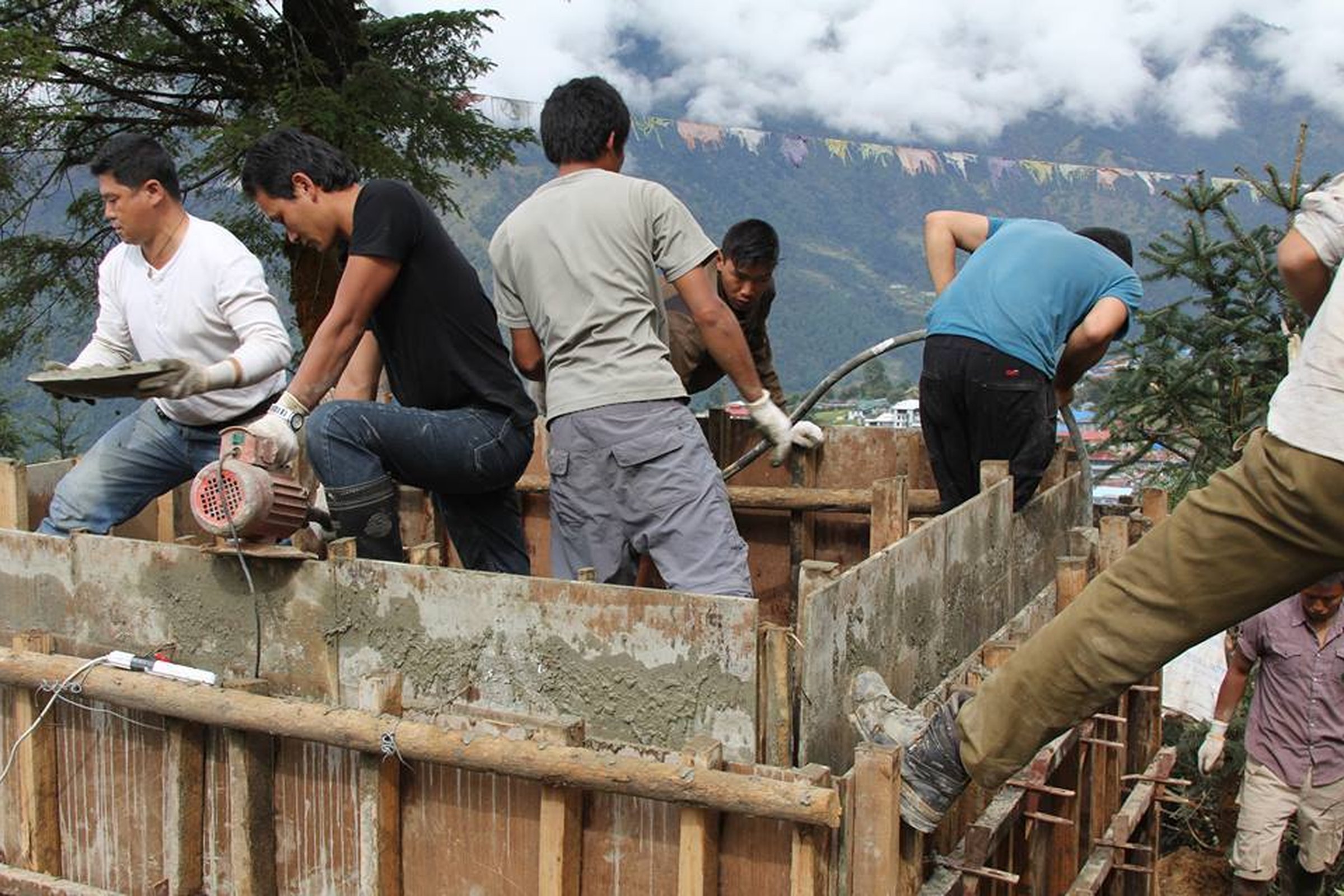
The Trust's own case for backing the scheme, set out plainly in its 2013 planning papers, was as much about relationship as engineering: "the local people have asked us to help"; "they've started it themselves and done the planning"; "they've raised a third of the cost"; and, the line that closed the memo, "we think Ed would approve." The system was finished on schedule for an official opening on 24 October 2014: an 80,000-litre reservoir and four smaller tanks feeding underground pipes to 200 homes and businesses, plus a high-pressure fire hydrant bypass. It came through the April 2015 earthquake unaffected, and an outside development specialist called it the best high-impact, low-cost water and fire-fighting scheme he had seen anywhere.