
Nepal Earthquake Rebuild (REDSS)
Project details
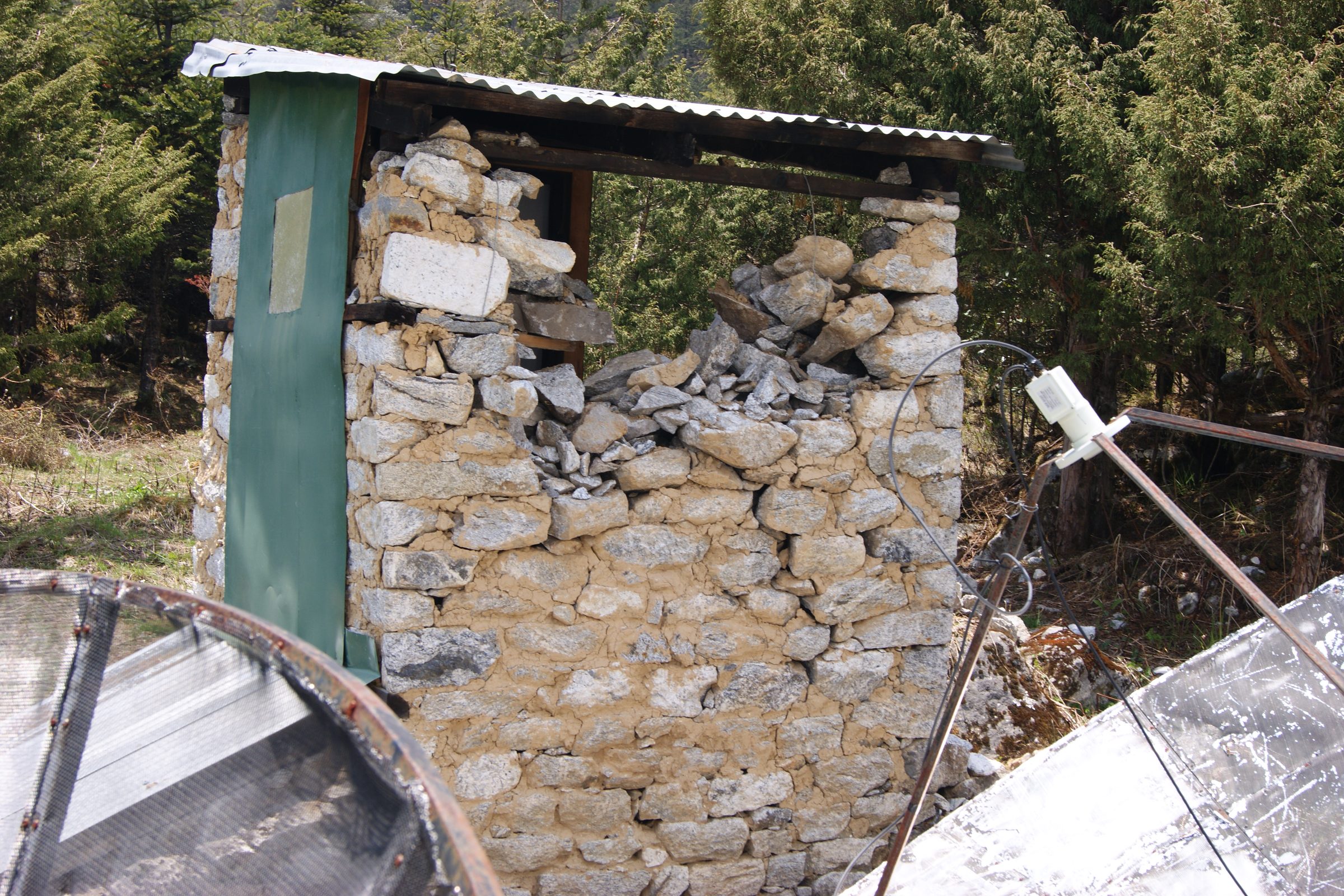
Two earthquakes struck Nepal in April and May 2015, damaging 227 schools in Solukhumbu district alone. Himalayan Trust Nepal responded with Rebuild Earthquake Damaged Solukhumbu Schools, known as REDSS, a two-year building programme run under the banner "build back better." It rebuilt and repaired classrooms to a new earthquake-resistant standard, using a reinforced stone masonry design later adopted nationally, and trained more than 150 local masons in the technique along the way.
By the time the wider three-year, $1.5 million rebuild effort was finished in April 2018, it had put up 150 earthquake-strengthened classrooms across 36 schools, benefiting more than 7,000 children, with materials carried in by hand, yak and porter because most sites had no road or helicopter access. Communities contributed a tenth to a fifth of each school's cost themselves, alongside rebuilding their own earthquake-damaged homes. General Manager Prue Smith called it the Trust's largest and most complex infrastructure project since Sir Edmund Hillary built Khumjung's first school in 1961.
The Trust's own assessment team, led by Dr Mingma Norbu Sherpa and including two civil engineers and an education specialist, visited 33 community schools the Trust had supported over six decades in the weeks after the quakes. Twenty-one schools got emergency temporary learning classrooms first, on a combined budget of about NZ$30,000, while the Trust worked out what a proper rebuild would cost and who could fund it.
Himalayan Trust Nepal's own two-year building programme, formally named Rebuild Earthquake Damaged Solukhumbu Schools (REDSS), ran through 2016 and 2017 and covered 15 schools: seven close to the district headquarters in year one, eight further into the mountains in year two, among them Khumjung, Thame, Phortse and Monjo. Cement had to be heli-lifted to the highest schools and rebar carried in by porter before winter made concrete work impossible. The finished tally, per the project's completion report, was 70 new classrooms, six repaired, six new gender-friendly toilet blocks, and 1,935 students benefiting, 47.5 percent of them girls. More than 150 local stonemasons were trained in the new design, every site was covered by accident insurance with no accidents recorded, and every one of the 15 schools held a public community meeting to disclose income and spending before handover.
The "build back better" design, traditional stone masonry tied together with reinforced concrete bands and a stronger timber roof truss, went on to become the Department of Education's official model for any three-room school block built nationally. The Trust's often-quoted headline figure for its wider post-quake schools effort, 150 classrooms across 36 schools for $1.5 million, in fact spans three separate donor-funded rebuilds running in parallel, of which REDSS was one; REDSS's own completion report, filed by project engineer Satya Man Lama in February 2018, covers 15 schools specifically. At the handover ceremony for the new Khumjung Secondary School building on 1 December 2017, the chief guest was Nanda Bahadur Pun, then Vice President of Nepal.
The clearest proof of the design came seven years later, in a different disaster. In August 2024 a glacial lake above Thame burst its banks and sent mud, gravel and boulders through the village, destroying dozens of houses and the local clinic. Thame Basic School, rebuilt under REDSS in 2017 to the new earthquake-resistant standard, stood. "The school... recently withstood the full force of the 2024 glacial flood disaster," Himalayan Trust New Zealand general manager Alexander Hillary said afterwards, "where water and huge boulders collided with the building... its survival is a testament to the necessity of our build back better philosophy."