
Phaplu Hospital
Project details
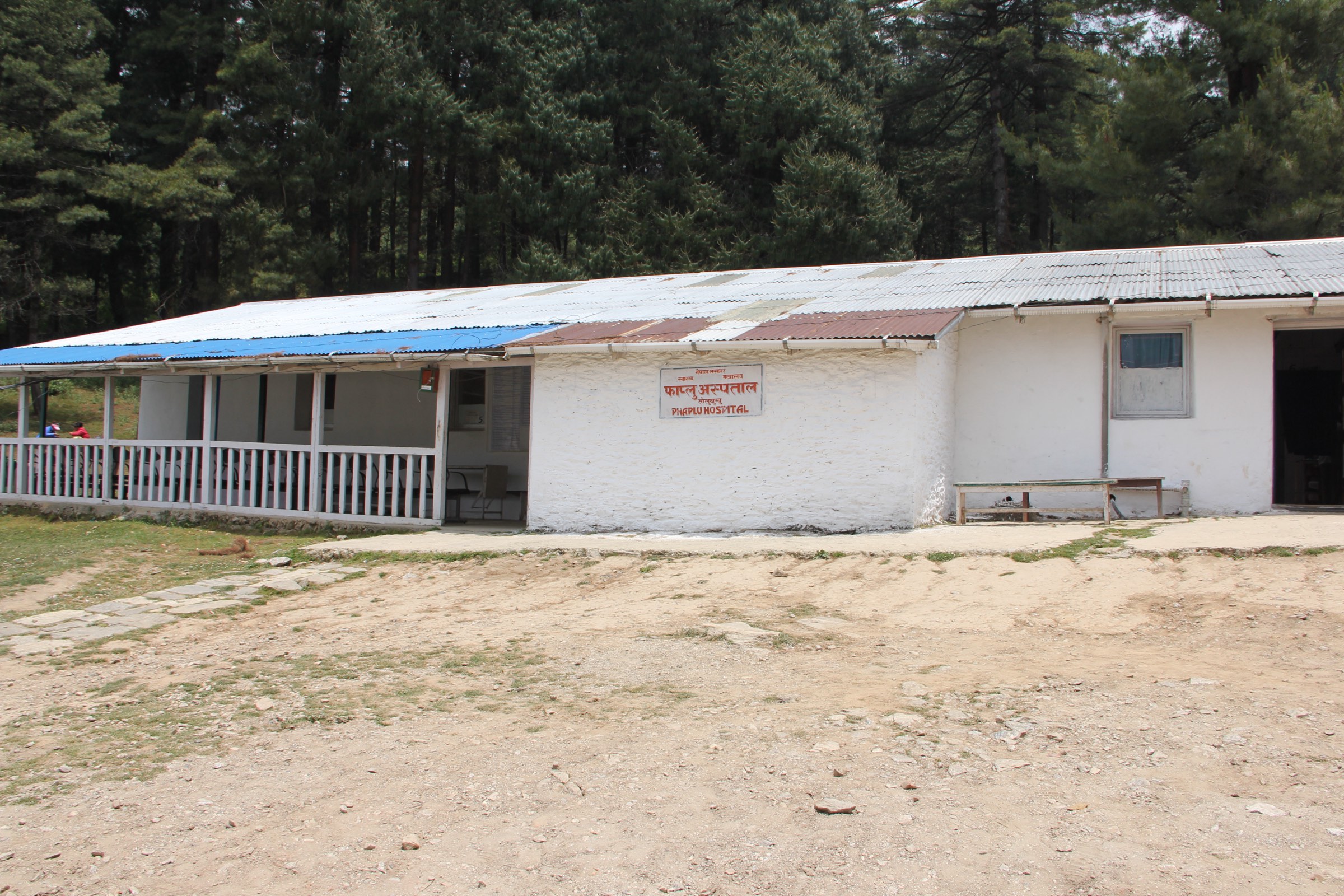
Phaplu Hospital was the second hospital established by Sir Edmund Hillary's Himalayan Trust, built in 1975 at Phaplu in the Solu valley.
Like Khunde, it was staffed by volunteer doctor couples from New Zealand and Canada on two-year postings. In 1982 it was handed over to Sherpa management under Dr Mingmar Gyelzen.
The hospital at Phaplu began with a lunch. In 1974 Sir Edmund Hillary visited the village, which already had a short, neglected airstrip, and was invited to the home of Ang Kazi Lama, head of the wealthiest Sherpa family in Phaplu. The family asked him to lengthen the airstrip and to build a hospital on land they would donate. He agreed to both.
Fundraising and planning ran through 1974, backed by a $175,000 grant from the New Zealand Government and $40,000 from the New Zealand public. Sir Ed's brother Rex Hillary led the building team with the mountaineer Murray Jones, while the sirdar Mingma Tsering levelled the hospital site. The longer airstrip let materials fly straight in.
The work was under way on 31 March 1975, when Sir Ed's wife Louise and their daughter Belinda were killed in a plane crash shortly after taking off from Kathmandu, on their way to Phaplu so that Louise could see the hospital's progress. Five days after the crash, Sir Ed wrote that he would go back to Phaplu to get the work going again: "Whatever else happens I feel the task must be finished." Rex Hillary's team completed the hospital's stone buildings by the end of 1975.
Dr Mingmar Gyelzen, a former pupil of Salleri High School, was the first Sherpa doctor to apply for the post at Phaplu. He applied in 1981 and ran the hospital from 1982 to 2007. He organised family planning, immunisation and eye camps across Solukhumbu, opened new health posts, trained health workers and started a nursing school. By the 1990s Phaplu was widely recognised as the best hospital in the hill regions of Nepal.
Since 2002 Phaplu and Khunde have been staffed entirely by Nepali medical professionals, and the Trust continues to fund training and medical supplies for both hospitals.