
Quality Education Programme Solukhumbu III
Project details
Quality Education Programme Solukhumbu III is Himalayan Trust Nepal's third five-year education programme in the district, launched on 1 August 2025 under a new contract with New Zealand's Ministry of Foreign Affairs and Trade. It builds on two earlier phases stretching back to 2016, training teachers, funding scholarships and computer labs, and supporting local government education staff, in partnership with EduTech Nepal and Solukhumbu's rural municipalities.
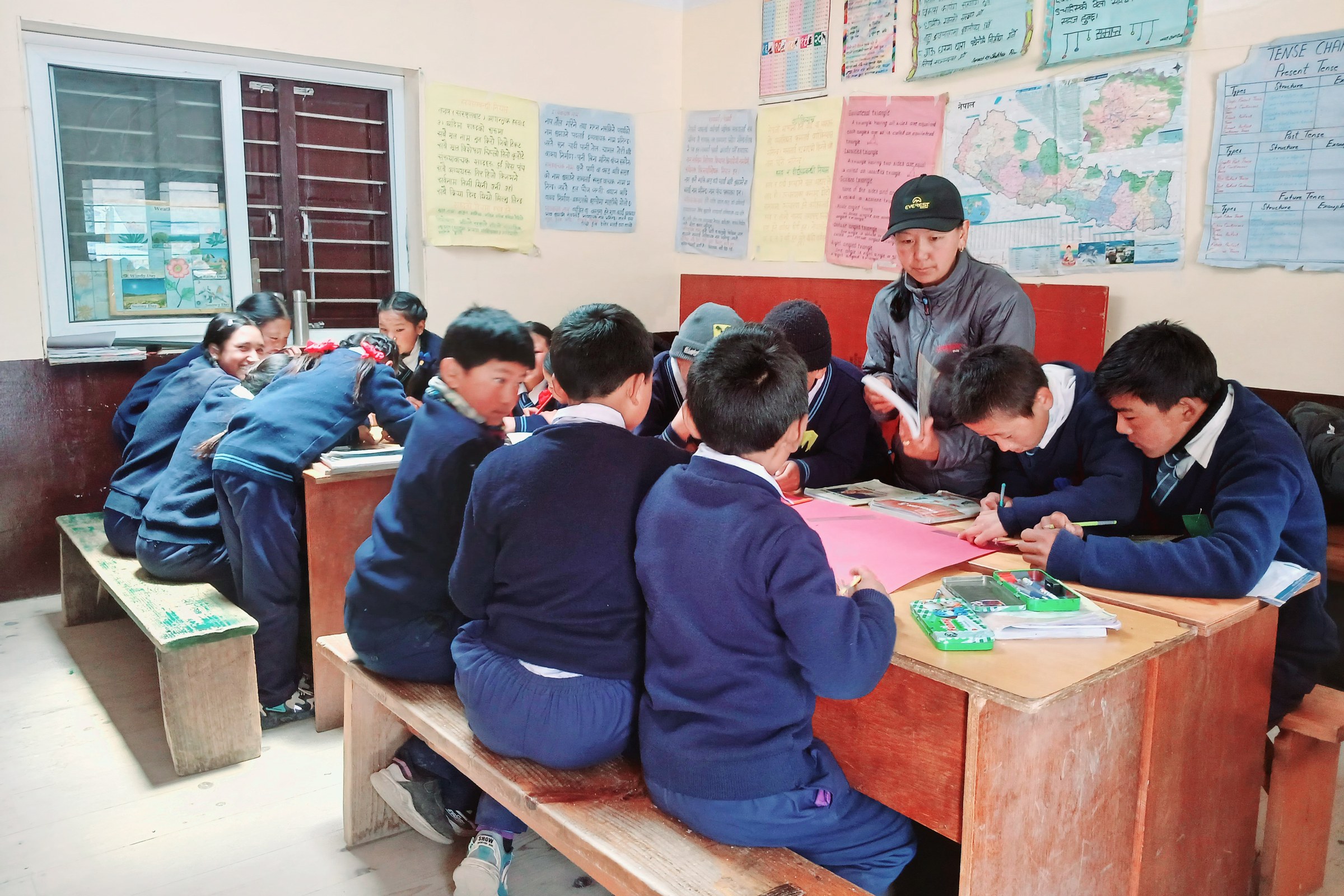
The programme was announced at Khumjung School in May 2025 by New Zealand's then deputy prime minister Winston Peters, the first visit to Nepal by a New Zealand foreign minister, as a NZ$1.8 million, five-year commitment. Its strategy concentrates investment in a small number of Centres of Excellence schools, chosen for strong enrolment and leadership, which are then expected to mentor smaller neighbouring schools across Solukhumbu's rural municipalities.
New Zealand's commitment to a third phase became public on a visit to Khumjung School by deputy prime minister and foreign minister Winston Peters in May 2025, the first visit to Nepal by a New Zealand foreign minister. More than 200 students and community members gathered as Peters toured classrooms, computer labs and the newly opened Sir Edmund Hillary Visitor Centre, and spoke with a class mid English and Nepali lesson. When the children began chattering during his speech, he told them, "quiet children, I was a teacher once." The visit, timed near the 72nd anniversary of the first ascent of Everest, confirmed a NZ$1.8 million, five-year funding partnership.
QEPS III changes how that money is spent. Its predecessor spread support across more than a hundred schools, many of them very small. The new programme instead concentrates classroom improvements, smartboards and scholarships on a smaller group of Centres of Excellence, chosen for enrolment, leadership and community engagement, on the expectation that they will mentor the smaller schools around them.
Early monitoring has already surfaced the programme's hardest problem. School rolls across lower and middle Solu are falling, as families move to Kathmandu and the Khumbu and as English-medium boarding schools grow. That trend is the main reason the programme concentrates its support rather than spreading it, and it will shape which schools the next five years can reach.