The history of healthcare in the Khumbu
Where it began
When Sir Edmund Hillary began working alongside Sherpa communities in the early 1960s, there were almost no modern health services in the Khumbu. Infant and child mortality was high, tuberculosis was a big medical problem, and a lack of iodine in the diet caused very high rates of goitre and cretinism.
Sir Ed knew that the smallpox vaccination programme he provided in 1963 was temporary. His vision was to establish permanent health services to treat people's illnesses and provide programmes to prevent disease. He approached the Government of Nepal for permission and began looking for funding.
In 1964 Dr Max Pearl was the doctor for Sir Ed's expedition. He became Sir Ed's medical adviser and later chaired the Trust's medical sub-committee. Working with Auckland endocrinologist Dr (later Professor) Kaye Ibbertson, the Trust began an iodised oil injection programme in 1966, modelled on one in the New Guinea Highlands. After 1966, no more Khumbu children were born with cretinism, as it was then known, and the large goitres once seen in every village became a thing of the past.
Khunde Hospital
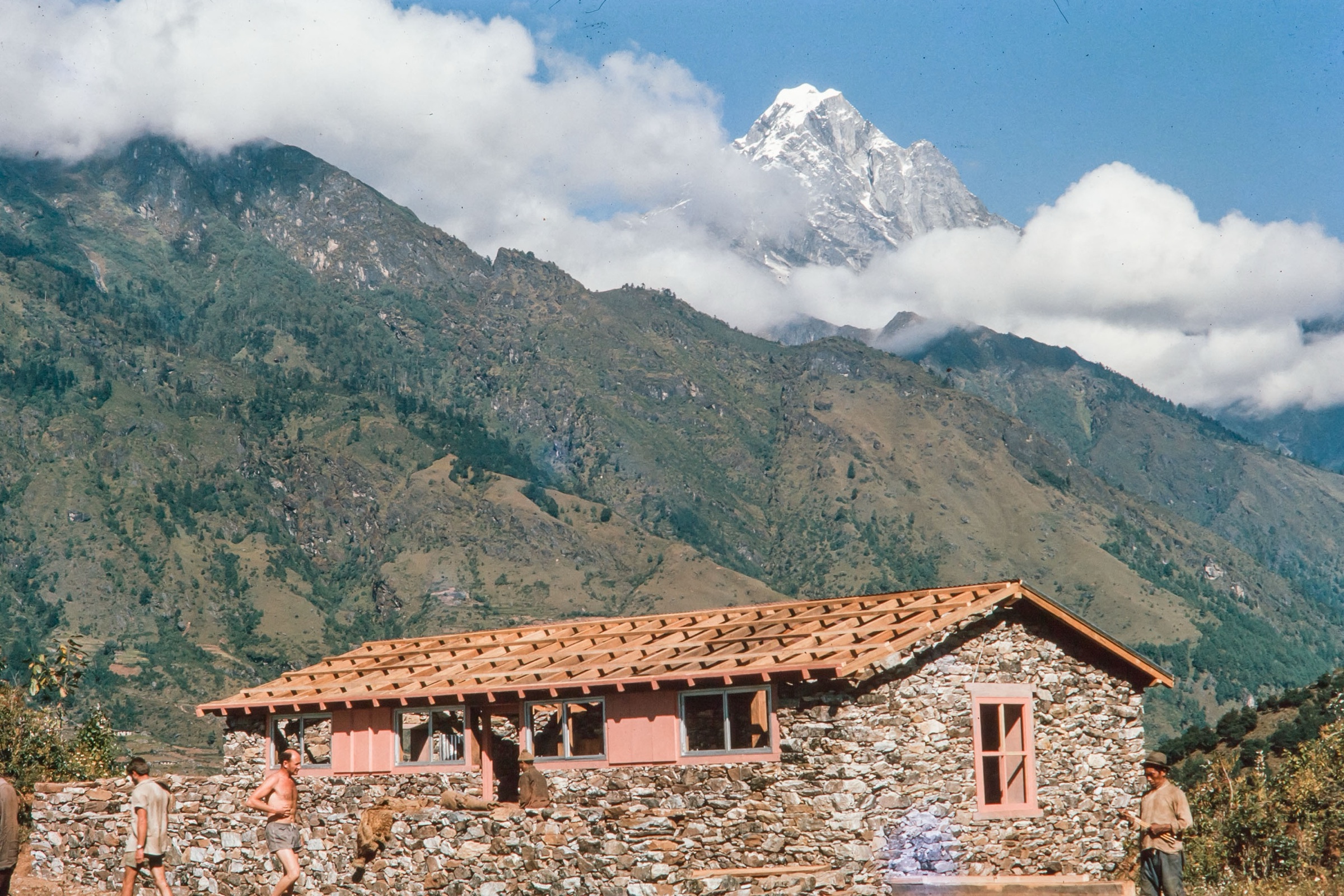
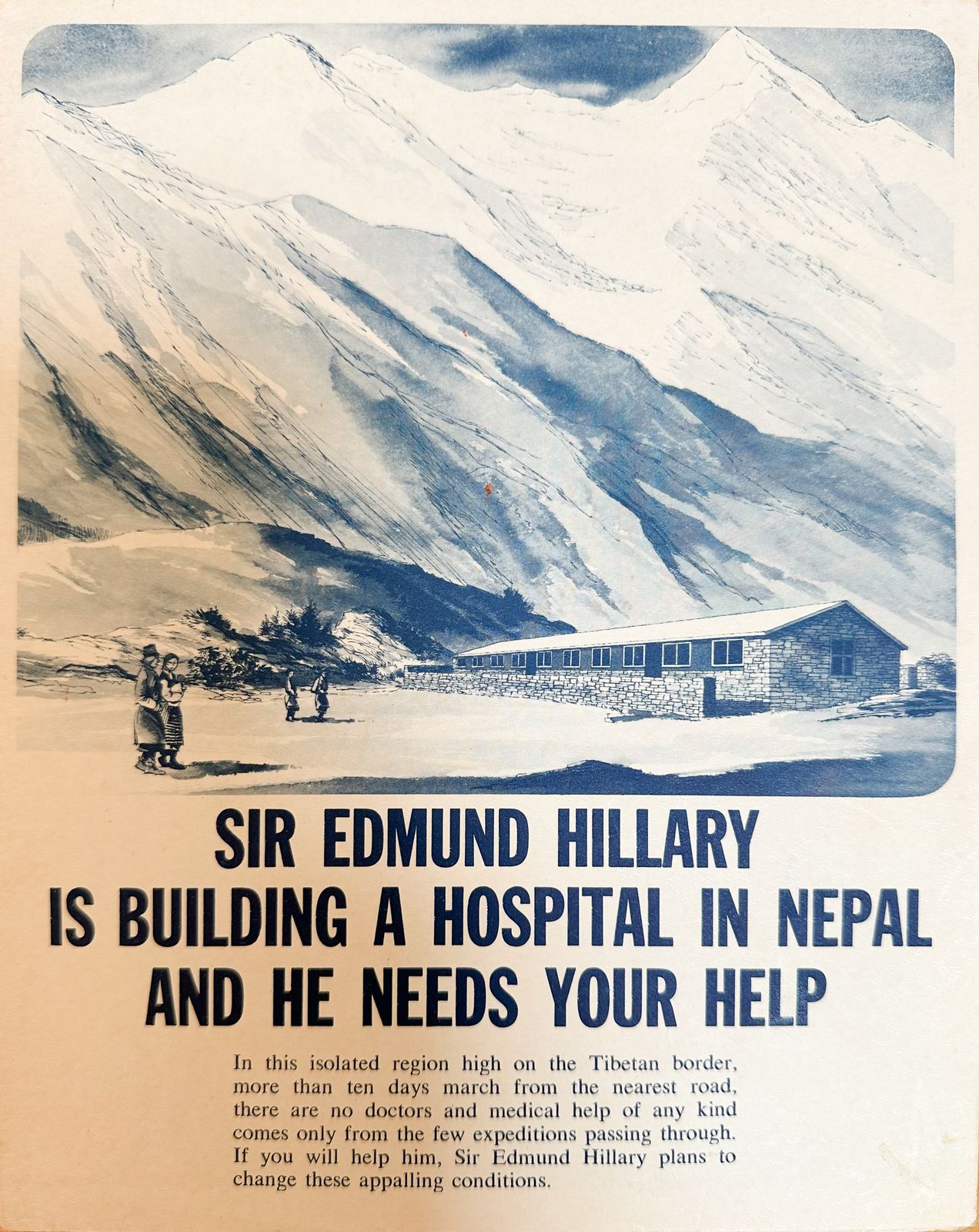
Khunde Hospital opened on 18 December 1966. Khunde was the home of Mingma Tsering, Sir Ed's friend and sirdar, and the project had the support of the village and the headman. The construction team of New Zealanders and Sherpas combined New Zealand and Sherpa building practices and skills to build a long stone building that faced the sun, one room deep, with running water and an aluminium roof.
The hospital was staffed with overseas volunteer doctors, first from New Zealand and later also from Canada. Dr John McKinnon was the first doctor. Diane McKinnon, a teacher, taught at Khumjung School. From the beginning, local staff were employed and trained to work in the hospital and the villages. Trust in the hospital grew.
Women began to attend antenatal classes, and a few had their babies in hospital. The developing local economy brought new groups of people into the area and to the hospital.
Despite the hospital's remoteness, Sir Ed and the Trust have seen that the hospital has been staffed, supplied and maintained, which is a huge achievement.
Phaplu and beyond
In Solu, the Trust built Phaplu Hospital in 1975, with a grant from the New Zealand Government and donations from the New Zealand public. For Sir Ed, it was the hardest of beginnings: Louise and Belinda Hillary were killed in a plane crash on their way to join the build. Foreign volunteers staffed the hospital. In 1980 the Government of Nepal took over the hospital, which became the district hospital for the Solu region, and the Trust has continued to support it. From 1982, Dr Mingmar Gyelzen, a Sherpa doctor from Solu, ran Phaplu for 25 years, and it became known as one of the best hospitals in Nepal's hill regions.
Handing over to local leadership
Over the decades, more of the work passed to Nepali hands. Kami Temba joined Khunde Hospital as a health worker in 1977. In 1997 he was accepted for medical training in Fiji, and in 2002 he became medical officer in charge of Khunde Hospital.