
Sir Edmund Hillary
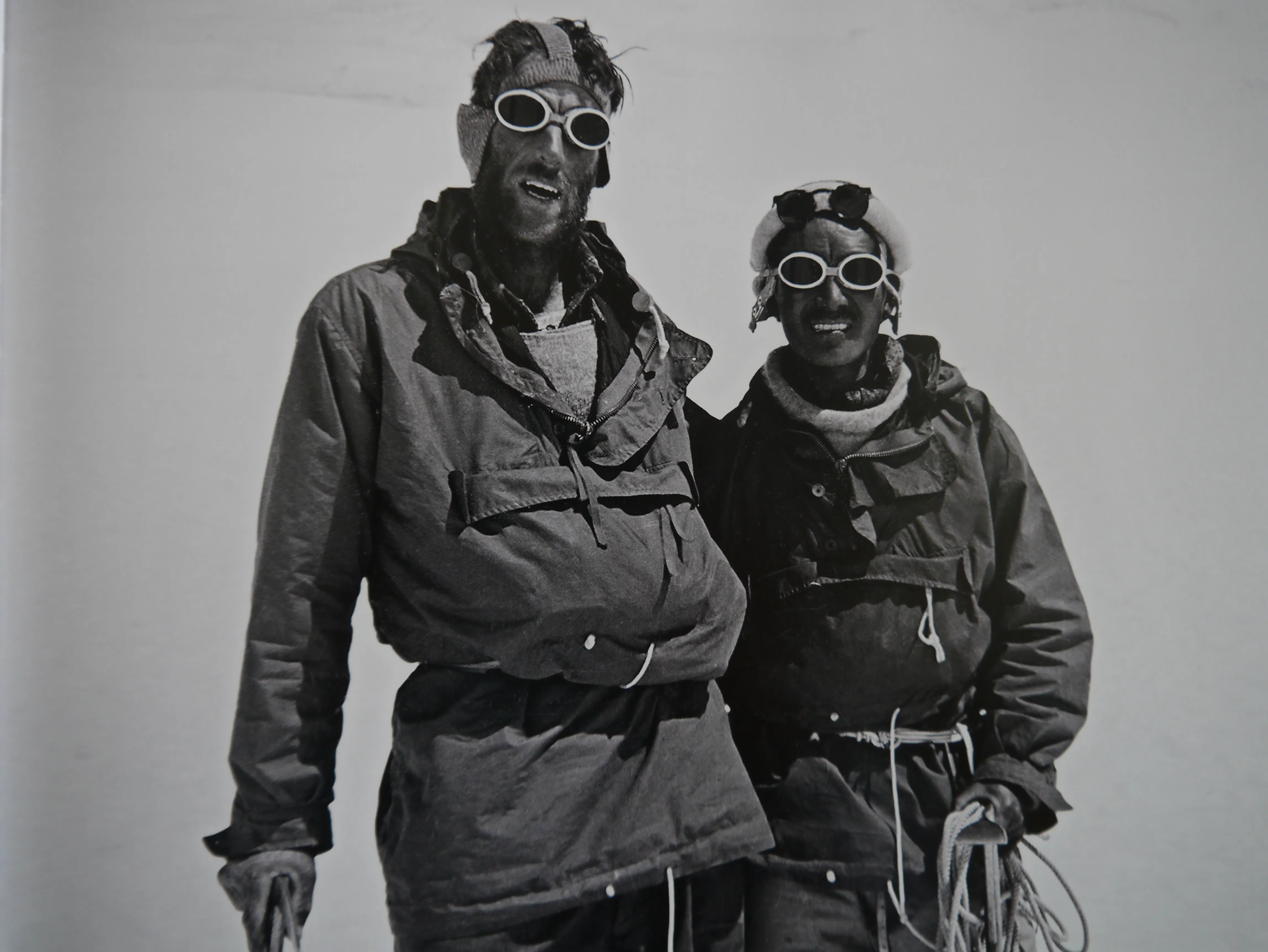
Mountaineer, explorer and philanthropist. In 1953 he and Tenzing Norgay became the first climbers to stand on the summit of Everest. He spent the rest of his life building schools and hospitals alongside the Sherpa people who got them there.
Founder of the Himalayan Trust
His greatest climb came after Everest
On 29 May 1953, Edmund Hillary and Tenzing Norgay became the first climbers to reach the summit of Everest. The world celebrated. For Hillary, that morning was the start of something rather than the end of it.
Early life

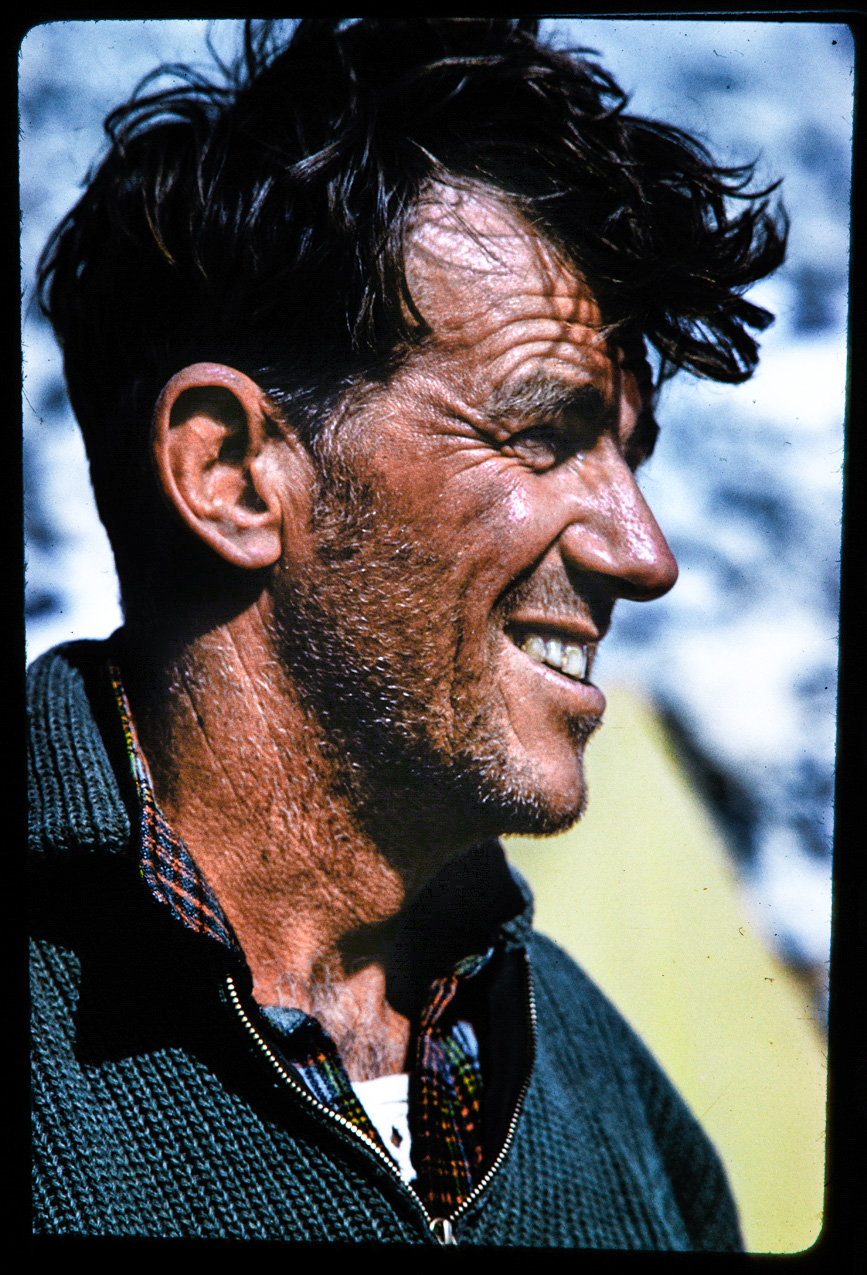
Edmund Percival Hillary was born on 20 July 1919 and grew up in Tuakau, a small farming town south of Auckland. His mother Gertrude, a trained teacher, taught him so intensively that he started secondary school two years ahead of his age group, which did him few favours. He went through school and two years at university feeling out of his depth, and left without passing a single unit.
In 1938 he joined his father Percy and his younger brother Rex in the family beekeeping business. Both brothers first registered as conscientious objectors to the Second World War, but in 1944 Hillary enlisted in the Royal New Zealand Air Force and served as a navigator on Catalina flying boats in the Pacific. He was badly burnt in a boating accident in the Solomon Islands in 1945.
Back in civilian life he went to the mountains. He learned to climb ice on Aoraki / Mount Cook and Tasman in the Southern Alps, and a decade of hauling hives around Auckland had left him fit enough to keep up with anybody. When the New Zealand Alpine Club offered its 1951 Garhwal team to Eric Shipton, Hillary was one of the two he took.
Everest, 1953

Hillary's route to Everest ran through India. In 1951 he climbed with a New Zealand expedition in the Garhwal Himalaya, and it was that season's form that won him a place on Eric Shipton's reconnaissance of Everest's unexplored southern side. That autumn the party became the first to see the whole of the South Col approach. It was the line every later expedition would follow.
In 1953 John Hunt led an immaculately planned British expedition. Hillary was a contender for the summit from the start: strong on snow and ice, stubborn, and unusually good at acclimatising. He climbed high with Tenzing Norgay, whose strength at extreme altitude was unmatched.
On 28 May the two of them pitched their top camp two thirds of the way up from the South Col. The next morning dawned cloudless and still. By 9am they were on the South Summit, looking at a final ridge of steep ice broken by a forty-foot step of rock now called the Hillary Step. They chimneyed up between the rock and the ice, and at 11.30am they stood on top.
A few more whacks of the ice axe in the firm snow, and we stood on top.
Edmund Hillary
Both men always described the summit as something they did together, and neither made much of who stepped up first. Hillary was made a Knight Commander of the Order of the British Empire that year. He was 33.
Life after Everest
The first school at Khumjung
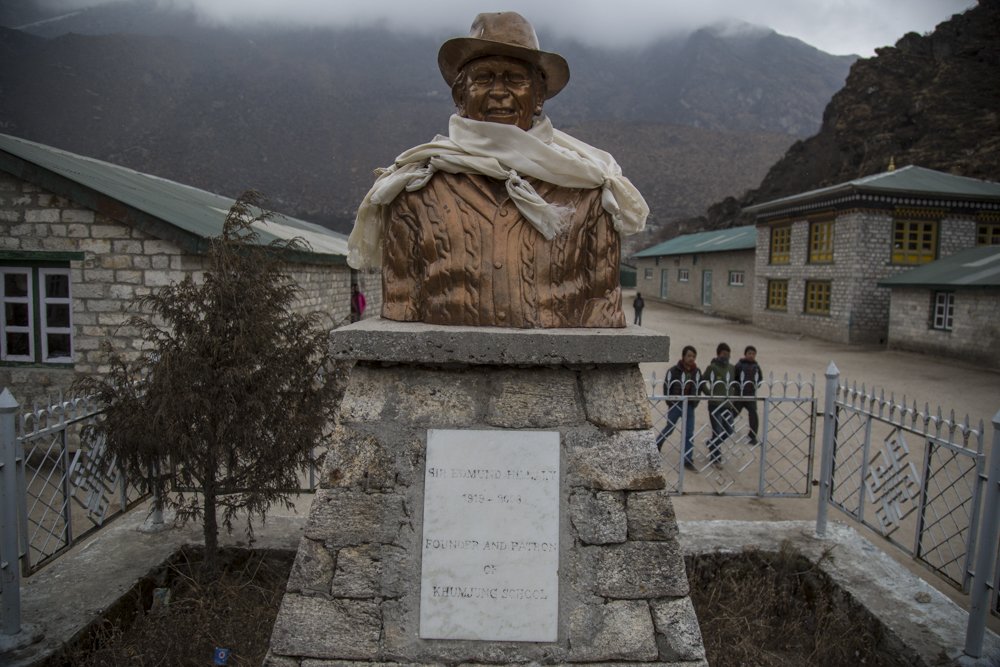
In 1960 Hillary was back in the Everest region, leading an expedition studying how the body copes with high altitude. At a camp one night he asked his sirdar, Urkien, what he would want most for his children and for the Sherpa people, if he could have one thing.
Hillary expected to be asked for a hospital. Urkien asked for a school, in his village of Khumjung.
A month later the village elders agreed to lend him the yeti scalp kept at their monastery so it could be examined by scientists. What they wanted in return was the school. In 1961 he kept his side of the bargain. Prefabricated aluminium sections were flown to a rough airstrip at Mingbo and carried up to the village. At 3,800 metres, Khumjung school was among the highest in the world.
The first 45 pupils gathered on the verandah with their teacher, Tem Dorji. A photograph of that morning still hangs in the Hillary family home.
Then the requests started arriving from other villages. This one came from the Sherpas of Thame, and Hillary printed it in his book Schoolhouse in the Clouds.
Though our children have eyes but still they are blind! So all we Sherpas of Thame are praying your honour to make our children just like those of Khumjung.
Chewang Rimpi Sherpa, Thak Noori Sherpa, Kinken Kang Sherpa and Khunjo Chumbi Sherpa, Thame
What he built
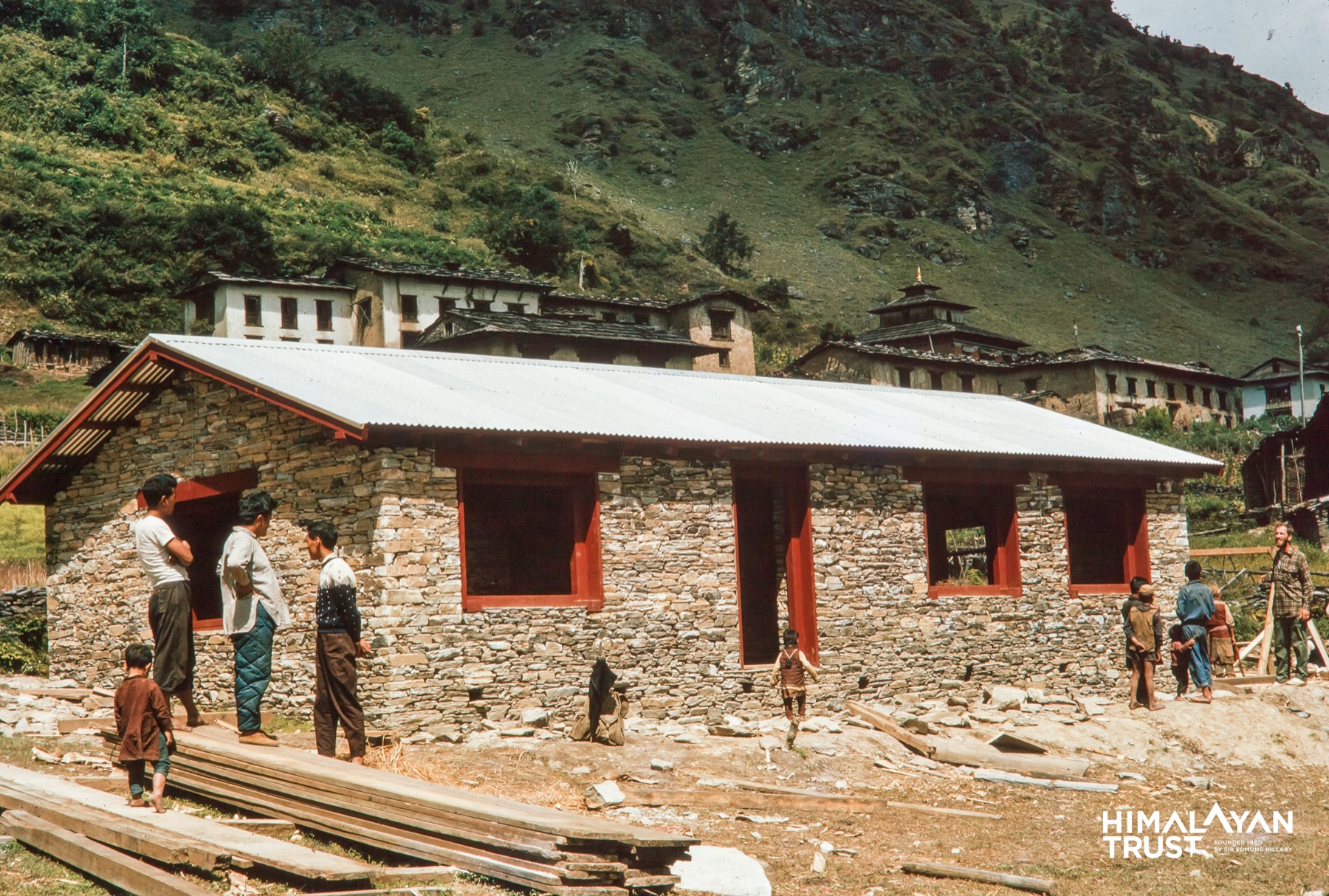
The Trust's early work was practical and local: the things people asked for, built where they asked for them.
1964, the Lukla airstrip. Built in two weeks by about a hundred Sherpa workers with shovels. A thirty-metre timber beam was dragged up and down to compact the surface, and two days of Sherpa dancing finished the job. It turned a fifteen-day walk into a short flight, and it changed the region.
1966, Khunde Hospital. The region's first hospital. Louise Hillary spent a year raising the money, giving up to five talks a day around New Zealand, and 40 Auckland Lions Clubs raised £30,000 of it. Volunteer doctors staffed it for more than a decade. The iodine programme run out of Khunde all but ended iodine deficiency in the Khumbu.
1970s, Sagarmatha National Park. Hillary could see that tourism was coming. He pushed for the park, and New Zealand helped Nepal set it up. Sherpa communities kept living and working inside its boundaries rather than being moved out of them.
And more besides. 27 schools. Two hospitals, at Khunde and Phaplu. Health clinics, bridges across Himalayan rivers, water systems and tree plantations. Most of it built by local people, with local materials, to a local brief.
Tragedy, and carrying on
On 31 March 1975 a small plane crashed shortly after taking off from Kathmandu. Louise Hillary and the Hillarys' younger daughter Belinda were on board, flying up to Phaplu to join Ed. He was there building a hospital with his brother Rex. Everyone on board was killed.
He finished the hospital. Phaplu opened the following year and it is still working. He went back to his projects in Nepal every year until the year he died.
Rebuilding Tengboche
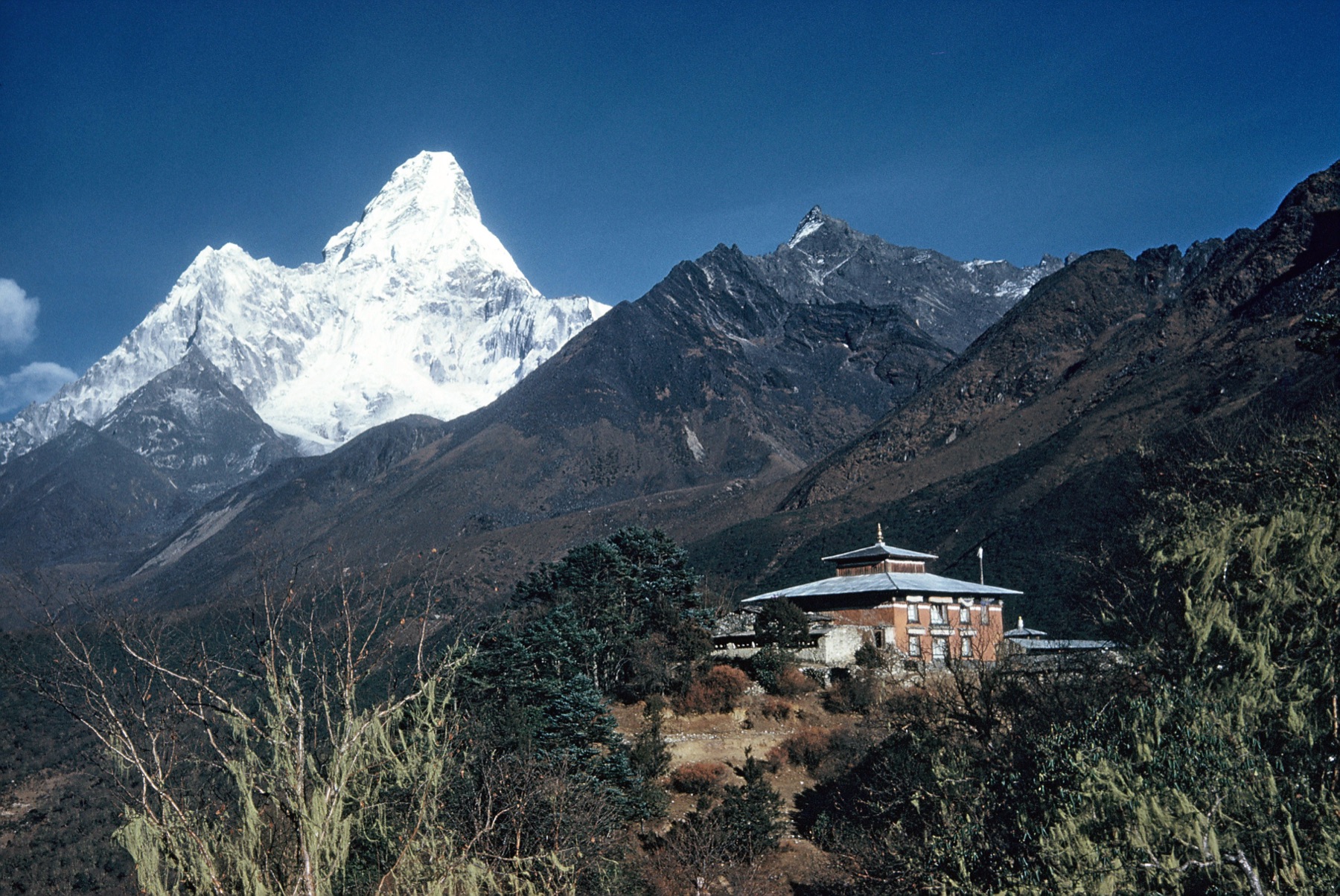
Fire destroyed Tengboche Monastery in January 1989. It is the spiritual heart of the Sherpa community, and most Everest expeditions still stop there for a blessing before they climb, as Hillary and Tenzing did in 1953.
Hillary rang the Rinpoche and told him it would be rebuilt. He was 69. For four years he spoke at fundraising events and worked with Sherpa communities and supporters on the reconstruction, which local craftsmen and artists carried out using traditional methods.
Tengboche reopened in September 1993. He was there.
The man the Sherpas knew

In Solu-Khumbu he was known as burra sahib, an old honorific that translates as “big sahib”.
What made the relationship unusual was the order he did things in. He asked first. The Khumjung school happened because Urkien asked for a school rather than a hospital. Thame got a school because the men of Thame wrote and asked for one. He then raised the money himself, largely in New Zealand, after the British Mount Everest Foundation turned him down.
And he handed things over. When Kami Temba had worked at Khunde Hospital for twenty years, the Trust found him a place at medical school in Fiji. He came back qualified, as Dr Kami Temba, Medical Superintendent of Khunde Hospital. That pattern, local people trained to run the things built with them, is the part of his method the Trust still works to.
After his death
Sir Ed died on 11 January 2008. The Himalayan Trust that he and Louise started in 1960 is still here, still run from New Zealand, and still working in the same valleys.
What carries over is not the building programme. Nepal builds its own schools now, and the Trust's work has changed with it. What carries over is the method. Ask first. Work with people rather than for them. Hand it over, and keep in touch.
Some of the first pupils at Khumjung became teachers there. Families who worked with Ed in the 1960s work with the Trust today. His son Peter Hillary has led treks for the Trust and speaks on its behalf.
I declare that I have had a full life with much happiness and a share of sadness. I have little cause for complaint. If however some people in New Zealand feel I have made some contribution to the prestige of my country then they could best demonstrate this by continuing modest support to the Himalayan People I have worked with for so many years.
Sir Edmund Hillary, from his will
1919 – 2008
A life in summits and service
A short version of a long life.
1919
Born in Auckland
1944
Joins the Royal New Zealand Air Force
1948
First ascent of the south ridge of Aoraki / Mount Cook
1951
Everest reconnaissance with Eric Shipton
1952
Cho Oyu attempt
1953
Summits Everest with Tenzing Norgay, 29 May
1958
Reaches the South Pole overland
1960 – 61
The Silver Hut expedition
1975
Louise and Belinda Hillary die in a plane crash near Kathmandu
1977
Leads Ocean to the Sky, up the Ganges by jet boat
1985
Stands at the North Pole with Neil Armstrong, having reached both poles and Everest
1985 – 89
New Zealand High Commissioner to India
1992
His portrait goes on the five dollar note, while he is still alive
1995
Appointed a Knight Companion of the Order of the Garter
2008
Dies in Auckland on 11 January, aged 88
Where to read more
Ed's life has been written about a great deal, and much of it is free to read. These are good places to start, whether you are researching a school project or you are just curious.
The Trust's own history
The Trust's story decade by decade.
Sir Edmund Hillary Official Website
Information about his expeditions, adventures, and ways to learn more.
Ed Hillary IP Ltd
The Hillary family's official site, run by Peter and Sarah Hillary, with books, films and photographs.
NZHistory: Edmund Hillary
New Zealand's government history site. A clear, sourced account of his life, written for students and teachers.
Te Ara Dictionary of New Zealand Biography
The scholarly biography, with a full bibliography.